The second-annual induction ceremony of the Vancouver Medical Staff Hall of Honour was held on 31 January 2019 at Vancouver General Hospital. The ceremony was well attended by the inductees’ families, friends, and colleagues. The Honourable Janet Austin, Lieutenant Governor of British Columbia, provided the opening remarks. The inductees are all pioneers in their specialties who achieved national and international recognition for their contributions to clinical and academic medicine/surgery.
BC Cancer has developed a manual to provide user-friendly, evidence-based guidelines for the management of oral side effects of cancer therapy. This manual will allow community-based practitioners to more effectively manage patients in their practices. The information contained in this manual has been collected from many resources, most significantly from the work of the Oral Care Section of the Multinational Association for Supportive Care in Cancer and the International Society of Oral Oncology.
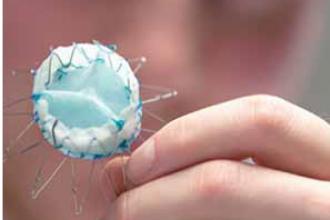
Researchers at UBC Okanagan have created the first-ever nanocomposite biomaterial heart valve developed to reduce or eliminate complications related to heart transplants. By using a newly developed technique, the researchers were able to build a more durable valve that enables the heart to adapt faster and more seamlessly. Assistant Professor Hadi Mohammadi runs the Heart Valve Performance Laboratory (HVPL) through UBC Okanagan’s School of Engineering. Lead author on the study, he says the newly developed valve is an example of a transcatheter heart valve, a promising new branch of cardiology. These valves can be inserted into a patient through small incisions rather than opening a patient’s chest. Existing transcatheter heart valves are made of animal tissues, most often the pericardium membrane from a cow’s heart. The new valve solves the problem of significant implantation risks and potential coronary obstruction and acute kidney injury by using naturally derived nanocomposites—a material assembled with a variety of very small components—including gels, vinyl, and cellulose. The combination of the new material with the noninvasive nature of transcatheter heart valves makes this new design very promising for use with high-risk patients. The combination of material, design, and construction of the valve lowers stress on the valve by as much as 40% compared to valves currently available.