Statistics show that one in five Canadians experience a mental illness or addiction problem in any given year, and one in two will experience a mental illness by age 40.[1] Mild to moderate depression and anxiety comprise a number of these cases. According to a 2016 report from the Canadian Chronic Disease Surveillance System, about three-quarters of Canadians who used health services for a mental illness annually consulted for mood and anxiety disorders.
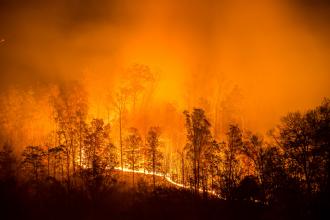
From Fort St. John to Victoria, and Cranbrook to Dease Lake, effects of climate change, including wildfires, drought, flooding, and severe weather events, are occurring with increasing frequency and severity across the province.[1] It is estimated that there has been a 1.4 °C average temperature increase across British Columbia in the last century, with an increase of 1.3 to 2.7 °C projected by 2050.[1] The health effects of this warming are numerous and multifaceted with implications for clinical practice across specialties.[2]
Earlier this year, the Canadian Paediatric Society joined the American Academy of Pediatrics and the Society for Adolescent Health and Medicine in recommending long-acting reversible contraception (LARC) as a first-choice contraceptive for youth.[1-3] LARC includes intrauterine devices (IUDs) and implantable birth control; however, in Canada, IUDs are the only type of LARC approved for use.[1] IUDs are either hormonal or nonhormonal (copper), and out-of-pocket costs for an IUD in BC range from $75 for a copper IUD to $325 to $400 for a hormonal IUD.[
In December 2018 an adult woman presented with a 2-month history of fever, chills, fatigue, weight loss, and headache. Her blood culture tested positive for Brucella canis. She helped transport rescue dogs from Mexico and the US to British Columbia, including a pregnant dog from Mexico that spontaneously aborted two stillborn puppies during transport. The dog tested positive for B. canis by immunofluorescent antibody test.
British Columbia continues to have record numbers of illicit drug overdose deaths. Currently, ongoing and multisectorial efforts are contributing to a better understanding of the factors characterizing or contributing to the overdose epidemic. Recent BC Coroners data[1] indicate there were 1489 suspected illicit drug overdose deaths in 2018 (approximately four deaths per day), similar to the previous year.