Over the past 20 years Canadian governments have failed to anticipate the need for evolution in our health system. While many may criticize President Obama’s health reforms in the US (recent polls show only 37% support), he did at least take on an issue that was controversial and difficult—an attitude rarely displayed by politicians in Canada.
“I want to be resuscitated but I don’t want to be on machines.”
“Do you want us to do everything for your father?”
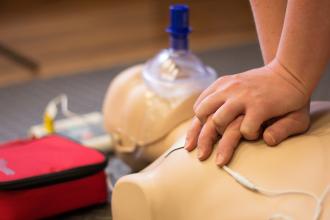
Having conversations about whether to attempt cardiopulmonary resuscitation (CPR) is complex, as illustrated by the ambiguity of the two statements above. CPR was first trialed in the early 1960s on postoperative patients who were likely temporarily medically unstable, and the results were very encouraging.[1]
This article highlights recent trends in antimicrobial resistance of key bacterial pathogens. These findings represent a brief overview of the BCCDC’s 2010 Antimicrobial Resistance Trends report.[1]
Ongoing progress, remarkable achievements, and continuing challenges can all be seen when looking at lung transplantation in BC today.
It is essential for those caring for patients with advanced respiratory disorders (respiratory and internal medicine specialists, family physicians) to have a good sense of when to refer for transplantation and when not to raise expectations unreasonably in the case of patients unlikely to benefit.