Congratulations on two exceedingly cogent editorials in your March 2011 edition! [“Privilege,” BCMJ 2011;53:62 and “Choosing the right resident,” BCMJ 2011;53:63-64.] As a retired family doc, diagnostic radiologist, and privileged member of multiple hospitals, I think that Dr Richardson’s local hospital is privileged to have him on staff.
This article is the opinion of the GPSC and has not been peer reviewed by the BCMJ Editorial Board.
The number of divisions of family practice in BC continues to grow, with four now representing communities in rural parts of our province: East Kootenay, Kootenay–Boundary, Shuswap–North Okanagan, and the South Okanagan–Similkameen, the last including rural areas such as Oliver working collaboratively with smaller urban centres such as Penticton.
One of the cornerstones of professionalism is the expectation to place the interest of others before one’s own. In recognition of this higher calling, society grants special privileges to professions, such as the ability to self-govern.
For physicians, the first fundamental responsibility in our Code of Ethics is “to consider first the well-being of the patient.” This is a testament of our commitment to be professional.
Due to the structural integrity of our Cheez Whiz-reinforced DNA, the baby boomer generation is going to last for a while, creating a problem. As this huge demographic wave hits retirement, our medical system is going to become more stressed than ever.
The boomers are going to consume more health care services as they age and demand ever-increasing investigations, treatments, and more. The difficult question is, how is our socialized medical system going to keep up? It is probably somewhat unrealistic to expect the following generations to fund this gluttonous blip.
This article is the opinion of the Council on Health Promotion and has not been peer reviewed by the BCMJ Editorial Board.
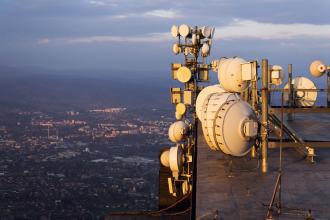
Radio communications and human exposure to radio frequency (RF) energy date back more than 100 years. However, the late 20th century saw a proliferation of wireless technologies, including cellular phones and their base tower infrastructure, television and radio signals, cordless phones, wireless Internet, and smart meters. Today, wireless communication devices are ubiquitous in homes, hotels, airports, schools, and libraries.