Does treating the soil as if it were machine to produce food for sale and sustenance degrade our biosphere? As world economies increase our standard of living should developing countries include more meat in their diets? Should destruction of equatorial rainforests to increase the growth of cheap beef exports be permitted? Is it right that we burn as much fossil fuel to transport our food around the globe as we do? Just because we can have winter crops in summer and summer crops in winter, should we?
Scholarly publishing is in a state of flux as electronic resources have arisen as an alternative to print. A distinct shift has occurred in the case of journals: print journal collections are dramatically declining with electronic journals becoming the standard format. The College Library is a case in point.
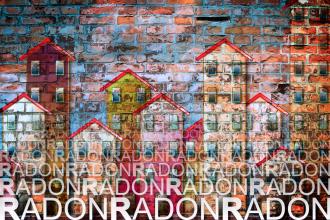
Radon is a naturally occurring radioactive gas produced from the fission of uranium in bedrock. Radon decays to alpha-emitting metals that, once inhaled, can damage DNA in the lung’s epithelial surfaces. Radon is the leading cause of lung cancer in nonsmokers and increases the risk of lung cancer in smokers. Exposure to radon accounts for more than 3000 lung cancer deaths annually across Canada, with more than 200 deaths in BC alone.[1]
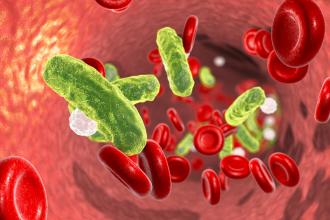
In 2001 the New England Journal of Medicine published results of a randomized control trial by Rivers and colleagues of early goal-directed therapy (EGDT) that represented a significant advancement in the emergency department (ED) management of sepsis.[1]
In the early 1950s 80% of middle-aged men in the UK smoked and only 0.5% said they had never touched a cigarette. The Second World War was over and it was a time of social progress and general merriment. Nevertheless, an ominous threat loomed on the horizon. The incidence of lung cancer in young men skyrocketed after the war and rapidly overtook tuberculosis as the major cause of death in the UK.[1]