By:
Between 2000 and 2012, WorkSafeBC accepted more than 3300 claims for elbow fractures--70% of the claimants were male, 30% were female; their median age was 42. Almost 72% of the injuries were the result of a worksite fall, while another 20% were caused by being struck by an object or having a limb caught in equipment or machinery. The majority of these workers were employed in the construction, service, or transport industries.
hidden
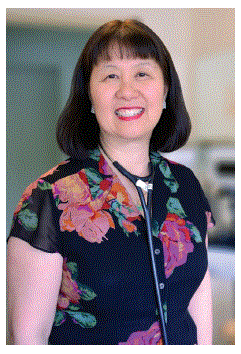
The Doctors of BC Board is made up of 39 elected members. Of that number, only six are female--three of whom serve on the Doctors of BC Executive. With such a paucity of female representation, what attracted the few women who are present to serve on the Board?
In the case of Dr Shirley Sze, it is an overwhelming passion for medicine and a desire to be of service.
hidden
I write this having just returned from the CMA General Council meeting in Ottawa. This year's meeting included thought-provoking discussions on several issues. The one I wish to highlight is end-of-life care, because General Council passed the following motion with an overwhelming majority.
The Canadian Medical Association (CMA) supports the right of all physicians, within the bounds of existing legislation, to follow their conscience when deciding whether to provide medical aid in dying as defined in CMA's policy on euthanasia and assisted suicide.
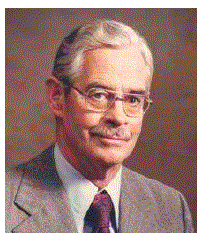
Dr Guy Barnes was one of my interviewers when I applied for a position on the intern staff at Royal Columbian Hospital in 1956. Several of us UBC graduates were accepted and we had a great year. During the internship, much of the month devoted to anesthesia was spent under the tutelage of Dr Guy Barnes and his colleagues, Drs Ivan Logan, Gordon Worsley, Murray Atnikoff, and Fred Walton.

Dr Pollock (2nd from left) provides instruction during a surgical training mission to Rwanda. This year he will take part in a similar mission to Haiti.
hidden