By:
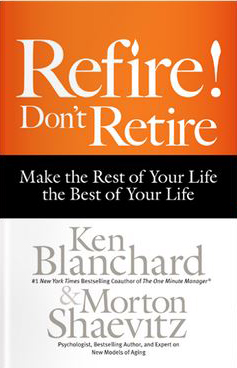
By Ken Blanchard and Morton Shaevitz. San Francisco, CA: Berrett-Koehler Publishers, 2015. ISBN 9781626563339.
This book addresses the conundrum faced by many new retirees: Now what? What am I going to do with the rest of my life to make it healthy, joyful, and rewarding?
The members of your Doctors of BC delegation to the Canadian Medical Association General Council have just come back from Halifax and I want to make two clarifications:
First, I am vegetarian and did not personally partake in the true Atlantic cuisine (although my 10-month-old daughter ate her weight in lobster and mussels).
Second, although there were plenty of opportunities for socializing, the delegation from BC was hard at work.
Why care?
The title of the GPSC article in the July/August issue of BCMJ [2015;57:246] caught my eye, and I thought I would read the article to gain a better understanding. Unfortunately, I came away with very little understanding because the language in the article is heavily loaded with bureaucratic terminology. I was hoping for a clear, simple explanation but instead came away with the too-common impression of a project filled with nebulous collaboration, embedded evaluations, and other vague notions.
The most striking statistics in the BCMJ article "Cancer Incidence in British Columbia Expected to Grow by 57% from 2012 to 2030" [BCMJ 2015;57:190-196] are the new cases of melanoma--965 reported in 2012 and 2495 expected in 2030, which is an increase of 159%, not the 57% average included in the title. As reported at the World Congress of Dermatology in Vancouver, a person born today has a 1 in 24 lifetime risk of developing melanoma (US figures).
The GPSC’s residential care initiative is designed to enable physicians to develop local solutions that improve the care of patients in residential care facilities. Five divisions of family practice began prototyping the initiative in 2011: Abbotsford, Chilliwack, Prince George, South Okanagan Similkameen, and White Rock–South Surrey.
hidden