By: Carol Kerfoot Brian Hunt, MD
Dr David Gilmore Hunt, 1944–2025
Issue: BCMJ,
vol. 68, No. 1, January February 2026,
Pages 43-44 Obituaries
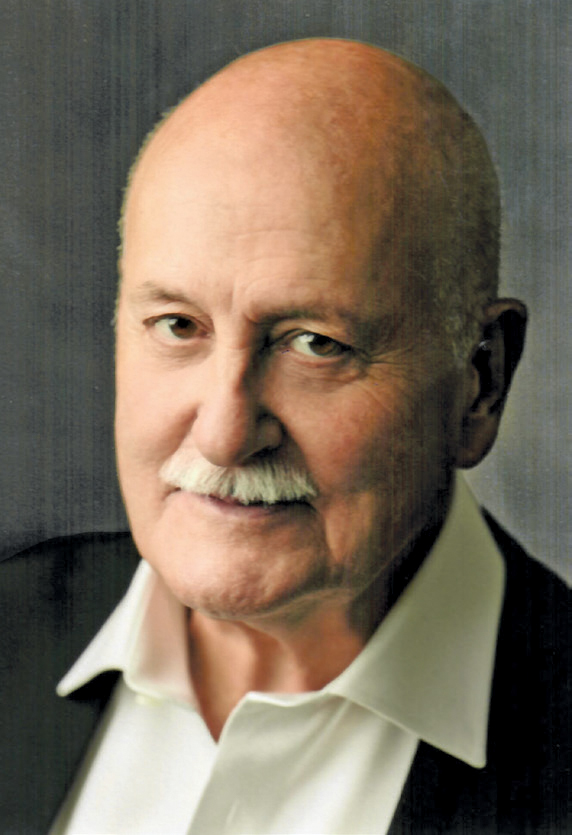
Dr David G. Hunt died on Thursday, 30 October 2025, as a result of an overwhelming chest infection and pulmonary fibrosis.
David, the youngest of four boys, was born in Victoria on 15 March 1944 to Jean and Leigh Hunt, where Leigh was in the army. The family returned to Vancouver in 1945, where David attended Prince of Wales Elementary and High School, graduating as school president in 1962. The school’s motto remains Ich Dien (“I serve”), and it embodies David’s entire life. He entered the University of British Columbia and followed in his father’s and two older brothers’ footsteps, choosing a career in medicine.
His postgraduate training began in 1969 in Toronto, after which he practised medicine for over 50 years with passion, empathy, and, above all, a sense of humor. His career had three phases, the first being emergency medicine, where he received a fellowship.
Returning to Vancouver, David worked in the Vancouver General Hospital emergency department and devoted many volunteer hours to creating the paramedic program, including the publication of the Handbook of Industrial First Aid. Following his time as an on-call emergency physician, David joined the Workers’ Compensation Board medical team, where he ran the Business and Employer Emergency Preparedness (BEEP) program—a revolutionary approach to integrate injured workers for early return to work.
David completed a graduate program in pain management at the University of California, San Francisco, which enabled him to enter his second phase of medical practice by joining the St. Paul’s Hospital Complex Pain Centre. Then he had more time to connect with his patients, forming strong bonds of support and compassion.
David’s work in complex chronic pain and his service with Pain BC and the BC Hospice Palliative Care Association earned him recognition in the field that led him to his final career phase: a palliative care practice at Lions Gate Hospital.
He was an active member of the Sovereign Order of St. John of Jerusalem for over 15 years, serving as commander of the local chapter and advocating passionately for its work in the palliative care sector. He was a longtime supporter of the Lumara Society, Doctors Without Borders, and the Salvation Army. He was also awarded Doctors of BC’s 2025 Silver Medal of Service.
David’s life was not all work and no play. He loved parties; fishing; hunting in the Cariboo; skiing at Whistler; bike trips; walking his faithful labradoodle, Sophie; and boating, particularly to Centre Bay Yacht Station as skipper of Piccolo.
David’s signature presentation, and his strong belief, was that laughter is the best medicine.
Family was always at the centre of David’s life, and he spoke often and lovingly of his deceased grandparents and parents. He was predeceased by two older brothers, John, the eldest, and his infant brother, Andrew, from sudden infant death syndrome. He is survived by his next-older brother, Brian.
David will be sadly missed by many friends and family members: his wife, Carol Kerfoot; his sons, Simon, Cameron, and Peter; his brother, Brian (Barbara); his sister-in-law, Beverly (John); his former wife, Dr Elaine Drysdale; Carol’s children, Joy, Michael, and Sylvia Kerfoot (Harrison); and his grandchildren, Emily, Madeline, Gabriella, Juliana, Charlie, Hannah, Ollie, and Natalie.
In lieu of flowers, please donate to a charity whose goals align with yours. And have a good long laugh for David; it’s what he would have wanted.
—Carol Kerfoot
Vancouver
—Brian Hunt, MD
North Vancouver
hidden
 |
| This work is licensed under a Creative Commons Attribution-NonCommercial-NoDerivatives 4.0 International License. |