Pancreatic cancer, part 1
Issue: BCMJ,
vol. 68, No. 9, November 2026
|
Page 312 |
Editorials
 |
| Dr Jennifer J. Telford |
Pancreatic cancer is the deadliest cancer in British Columbia, with a 5-year survival rate of only 16%.[1] Although it is the 11th-most diagnosed cancer in the province, it is the 3rd-leading cause of cancer death.[2]
In this issue of the BCMJ, I am pleased to present three articles on pancreatic cancer from a multidisciplinary group of physicians, nurse practitioners, educators, and researchers from across BC.
Increasing availability of genetic testing for patients and families of patients diagnosed with cancer has led to the identification of pathogenic germline variants associated with a susceptibility to pancreatic cancer. Screening of the pancreas is recommended for certain high-risk individuals and is available at specialized centres. The first article aims to increase awareness of hereditary pancreatic cancer syndromes, the indications for genetic testing, and current recommendations for pancreas screening.
The lethal nature of pancreatic cancer often creates anxiety among both patients and physicians when an abnormality is detected in the pancreas. Cross-sectional abdominal imaging has become increasingly common and more accurate, which has allowed for the detection of even very small pancreatic lesions. Most of these are cystic lesions. Although only a minority of pancreatic cystic lesions will progress to a high-risk precursor or pancreatic cancer, that possibility weighs heavily on both patients and clinicians. Uncertainty regarding the natural history of these lesions, conflicting guidelines, and inconsistent messaging across radiology reports and among gastroenterologists and surgeons have made the management of cystic lesions challenging. The second article reviews the spectrum of pancreatic cystic lesions, summarizes current evidence and guidelines, and offers a pragmatic approach to evaluation and management.
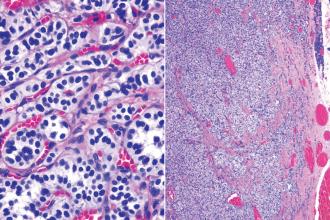
Pancreatic neuroendocrine tumors are increasing in incidence but remain a less common form of pancreatic malignancy, with a natural history and management strategy distinct from pancreatic adenocarcinoma. The third article provides a comprehensive review of pancreatic neuroendocrine tumors, including their classification, specific tests used to establish a diagnosis, and oncologic management.
Our goal in this issue is to highlight recent advances in the diagnosis of patients who have an increased risk of pancreatic cancer and review pancreatic neuroendocrine tumors. The December issue will discuss the management of patients with pancreatic adenocarcinoma. We hope this collection of articles provides clinicians with practical guidance for patient care while increasing awareness of available diagnostic services and patient resources across BC.
hidden
This editorial has been peer reviewed.

This work is licensed under a Creative Commons Attribution-NonCommercial-NoDerivatives 4.0 International License.
References
1. Statistics Canada. Age-standardized five-year net survival estimates for primary sites of cancer, by sex, three years combined. 13 August 2025. Accessed 21 November 2025. https://doi.org/10.25318/1310016001-eng.
2. Brenner DR, Gillis J, Demers AA, et al. Projected estimates of cancer in Canada in 2024. CMAJ 2024;196:E615-E623. https://doi.org/10.1503/cmaj.240095.
hidden
Dr Telford is a clinical professor of medicine at the University of British Columbia, a gastroenterologist at St. Paul’s Hospital, and medical director for the BC Cancer Colon Screening Program.