jjablkowski's blog


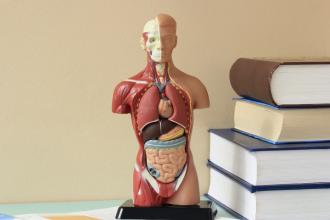
My wife died 3 years ago, and in accordance with her wishes, her body was donated to the Department of Cellular and Physiological Sciences at the University of British Columbia Faculty of Medicine. I received telephone and written thanks for the donation of her body, and a year ago, I received her cremated ashes, again, with many thanks.

Read More


By Dr Tina Fetner, Professor and Chair, Sociology Department, McMaster University.
UBC Press, 2024. ISBN: 9780774869515. Paperback, 204 pages.
 
I recently read this excellent book, Sex in Canada: The Who, Why, When and How of Getting Down Up North, which offers a picture of Canadians’ sex life before the recent pandemic and explains the who, why, when, and how we act. The book presents data on how things are, it offers no opinions on how sex in Canada should be.

The picure of sex in Canada is presented in the book in six main topics:

Read More


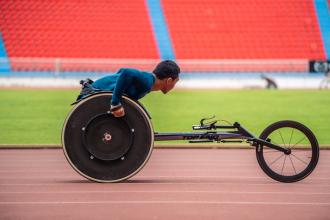
In 1939, Dr Ludwig Guttman, then a 40-year-old neurologist and neurosurgeon, escaped from Germany and found his way to the United Kingdom. There he continued his work and studies in Oxford to advance medical approaches for those suffering crippling disorders such as spinal cord injuries. He saw his primary task not only as enabling the paraplegics’ physical rehabilitation but also as instilling in them the confidence to live a full life with their permanent disability. 

Read More


I had a great time watching Paris 2024 Olympic events—gymnastics, pole vault, high jump, archery, and swimming. I had to laugh while watching the swimming; at my age of almost 95, I still swim almost daily, but it takes me a leisurely 30 minutes to reach 500 metres. The fine women athletes took less than 4 minutes to swim the 400 metre in their individual medley race. 

Read More


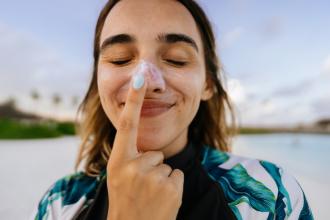
The skin is our body’s largest organ. Some of its many roles include protecting against pathogens, storing water and lipids, and controlling water loss by preventing water from escaping by evaporation. The skin has nerve endings that detect and sense temperature, pressure, touch, and pain from injury.[1] Overall, these senses—or sensations—might be considered our skin’s primary functions in that they are key to our survival as individuals and as a social species.

Read More

Pages