
The current state of cardiac rehabilitation in British Columbia and Yukon: Mending the gaps
Issue: BCMJ,
vol. 68, No. 7, September 2026,
Original Research
ABSTRACT
Background: Cardiac rehabilitation has been shown to decrease cardiovascular mortality by 26% and hospital readmissions by 18%, yet only 34% of eligible Canadian patients studied participated. Cardiac Services BC conducted an environmental scan to assess current cardiac rehabilitation services and identify opportunities for improvement.
Methods: A cross-sectional survey was sent to all cardiac rehabilitation programs in British Columbia and Yukon to understand the availability and quality of cardiac rehabilitation services.
Results: Respondents from all programs completed the survey (35 responses representing 43 programs). Six of the survey respondents represented 14 cardiac rehabilitation programs as affiliated programs under one governing body. Approximately 6100 patients are enrolled in a cardiac rehabilitation program in BC annually. Most (65%) of the programs offered education and exercise. Only 47% offered all core components surveyed. Perceived service delivery barriers included unmet demand, barriers to access, instability of existing services, and limited adoption of virtual health.
Conclusions: Cardiac rehabilitation programs face significant challenges despite proven benefits. Potential opportunities to improve access to these programs include developing comprehensive provincial service delivery models aligned with cardiac rehabilitation guidelines that include evidence-based clinical practice, defined program models, access benchmarks, operational structures and processes, and performance outcome measurements.
This province-wide environmental scan found that only 47% of programs offer all six core components of cardiac rehabilitation programs recommended by the Canadian Association of Cardiovascular Prevention and Rehabilitation.
Background
Cardiac rehabilitation is a multidisciplinary, systematic, yet personalized therapeutic intervention for the provision of evidence-based secondary prevention care in patients with cardiovascular disease.[1] Cardiac rehabilitation is typically delivered as a suite of education sessions and supervised group exercise classes. The Canadian Association of Cardiovascular Prevention and Rehabilitation’s clinical practice guidelines recommend that all cardiac rehabilitation programs have the following core components: patient assessment, risk stratification, health behavior interventions, risk factor modification, exercise training, patient education, and continuous assessment of performance measures.[1]
In a study by Anderson and colleagues, cardiac rehabilitation decreased cardiovascular mortality by 26% and hospital readmissions by 18% in patients referred.[2] Other benefits included reducing risk factors for cardiovascular disease[3] and improving overall function, quality of life,[4] psychological well-being, anxiety, and depression.[5] Additionally, participation in cardiac rehabilitation is associated with savings of up to $3000 in annual health care resource utilization per patient.[6] Despite these benefits, cardiac rehabilitation remains largely underutilized: in a study by Grace and colleagues, only 34% of eligible Canadian patients studied participated in a cardiac rehabilitation program.[7] Furthermore, evidence suggests there is insufficient access to programs and scant strategies to increase equity for underrepresented groups.[7]
In British Columbia, there is no provincial oversight for cardiac rehabilitation services. Cardiac rehabilitation programs are funded using a mixed model: regional health authorities’ global budget, not-for-profit organizations’ donations, private funding, and revenue from direct costs to patients. Some extended medical benefits reimburse cardiac rehabilitation costs for patients.
In 2017, Cardiac Services BC led a provincial forum to review the state of cardiac rehabilitation and inform the development of a long-term strategy to improve equitable access to care.[8] The Heart and Stroke Foundation also developed the national Heart Failure Resources and Services Inventory to gather data on the hospital-based services available to people with heart failure across Canada, including a focus on cardiac rehabilitation.[9] Clinician leaders established provincial networks to create a services inventory to improve patient and provider knowledge of available cardiac rehabilitation services. Insufficient baseline cardiac rehabilitation services were identified provincially and nationally as a key issue requiring a provincial approach.
The current availability and quality of cardiac rehabilitation services in BC and Yukon were unknown. The primary objective of this environmental scan was to evaluate the state of cardiac rehabilitation services in these regions.
Methods
A cross-sectional survey of all cardiac rehabilitation programs in BC and Yukon was performed between March and June 2023 (see the supplemental material). The survey, which was developed by a Cardiac Services BC team and provincial subject matter experts, addressed a wide range of topics, including care delivery models and program core components.
Forty-three cardiac rehabilitation programs were identified using an updated provincial inventory. Thirty-five online surveys were administered; six of the survey results represented 14 cardiac rehabilitation programs as affiliated programs under one governing body (i.e., a hospital-based program and affiliated community programs). The survey results represented all 41 operational cardiac rehabilitation programs and one program temporarily on hold in BC (97.7%) and one operational cardiac rehabilitation program in Yukon (2.3%); together, they represented 10 hospital programs, 31 community programs, and two fully virtual programs. Yukon’s only cardiac rehabilitation program was included because its patients are often transferred to BC for cardiac procedures.
Checkbox Survey software was used, and surveys were sent to each cardiac rehabilitation program’s medical director or program manager via email. Participation in the survey was voluntary.
Rural and urban cardiac rehabilitation programs were defined based on their geographic location. Multidisciplinary cardiac rehabilitation teams were defined as consisting of health care professionals from three or more disciplines. High-risk patients were defined based on the American Association of Cardiovascular and Pulmonary Rehabilitation’s guidelines.[10]
This study was conducted as a quality improvement initiative and did not require formal research ethics approval, as per standard ethical guidelines. Descriptive statistical methods were employed to analyze survey responses. When possible, responses were provided at the individual program level (n = 43); otherwise, aggregate program responses were used (n = 35).
Results
Thirty-five responses were received (100% response rate), representing 43 cardiac rehabilitation programs within BC and Yukon. Ten were from rural programs. Annual reported patient intakes ranged from 5 to 1200, and enrollment in programs that provided an exercise component ranged from 27 to 800 participants.
Access
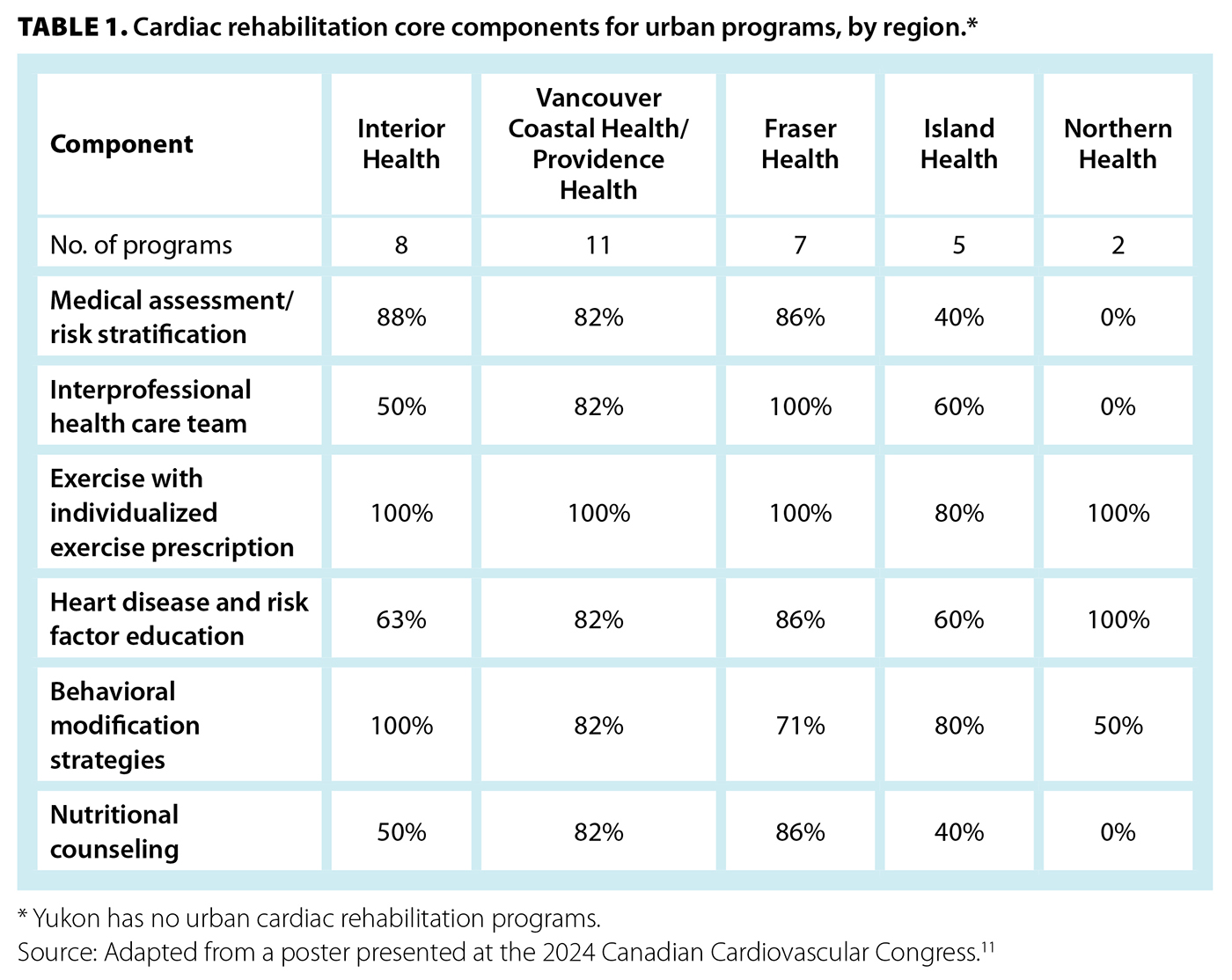
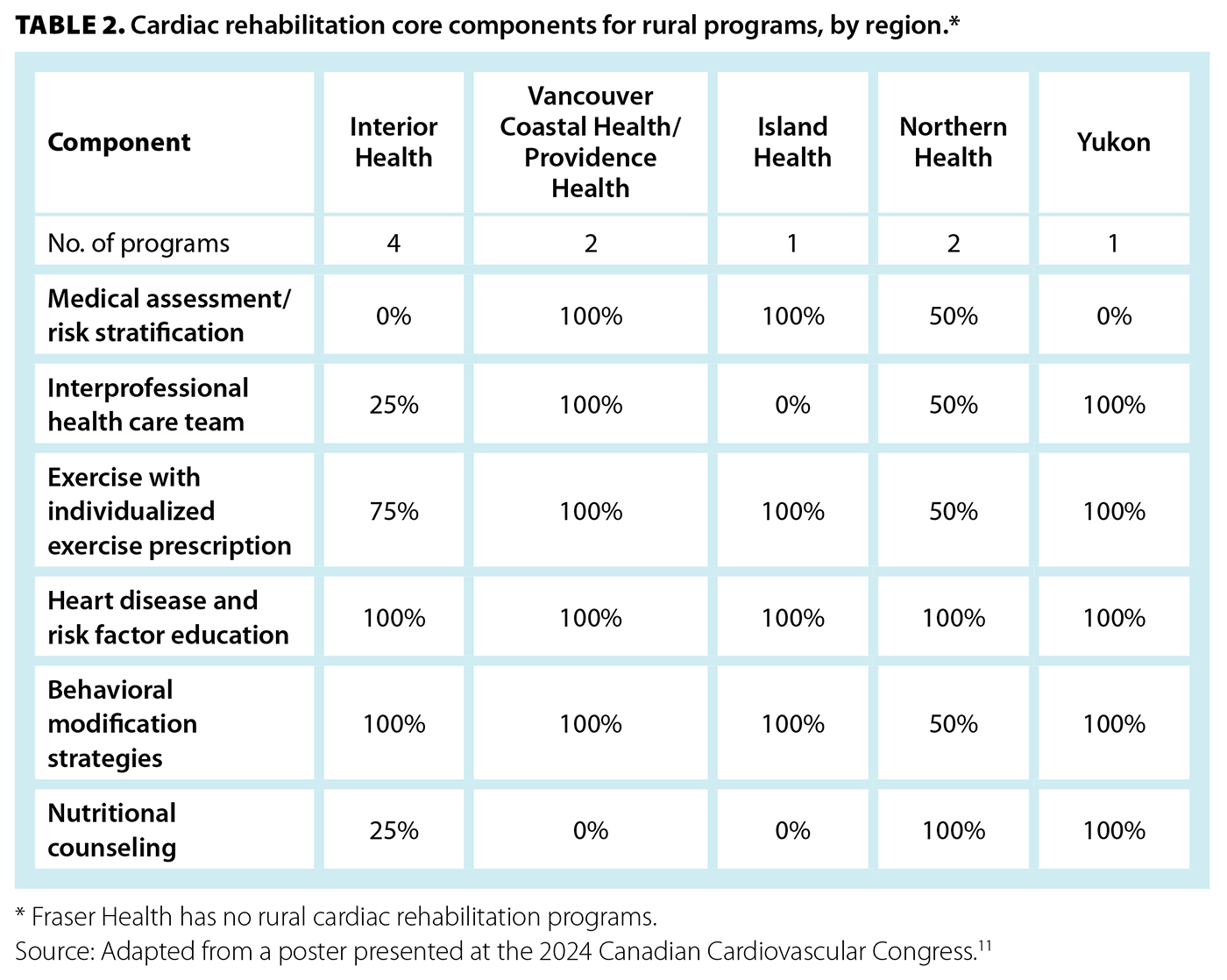
Seventy-seven percent (33/43) of cardiac rehabilitation programs were in urban centres [Table 1]; 23% (10/43) were in rural communities [Table 2].[11] Eighty-eight percent (38/43) of cardiac rehabilitation programs provided their services solely in English. Sixty-seven percent (29/43) of cardiac rehabilitation programs required patients to pay out-of-pocket expenses, whereas financial assistance was offered in 21% (9/43) of programs.
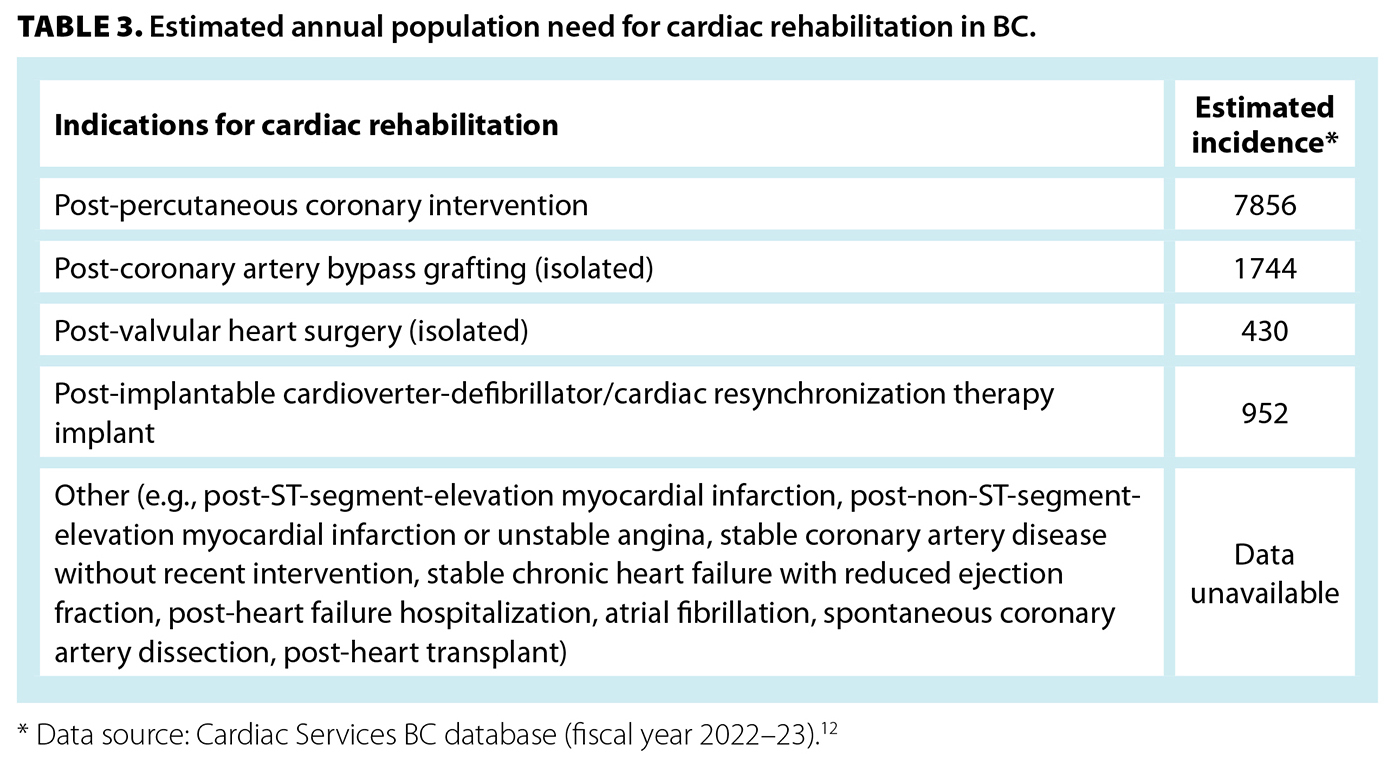
Based on survey responses from active cardiac rehabilitation programs, 6111 patients (including all indications) are enrolled in a cardiac rehabilitation program in BC annually. However, in fiscal year 2022–23, 10 982 BC patients underwent cardiac procedures that included indications for cardiac rehabilitation [Table 3].[12]
Cardiac rehabilitation enrollment indications
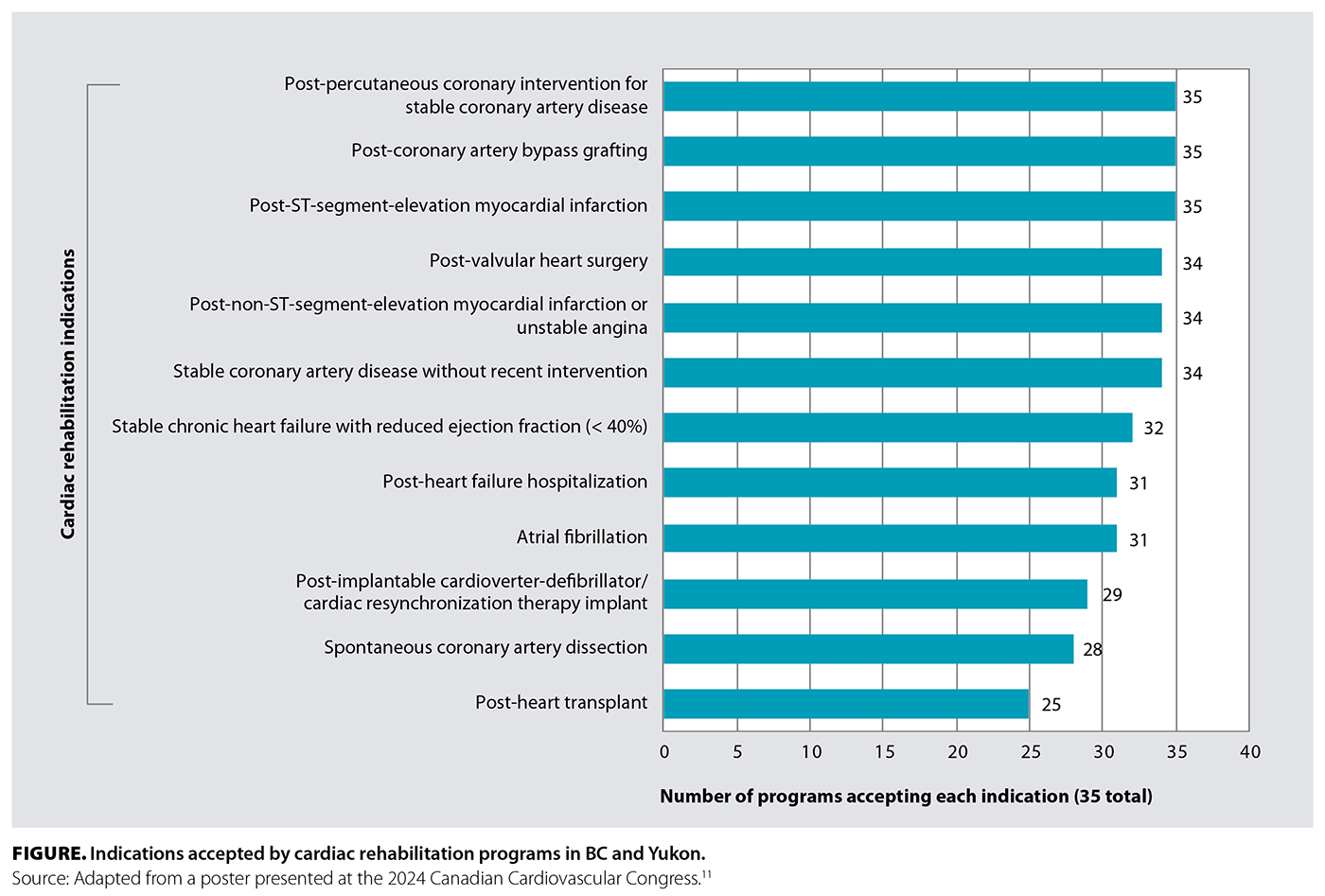 All programs reported accepting standard cardiac rehabilitation indications of post-percutaneous coronary intervention for stable coronary artery disease, post-coronary artery bypass grafting, and post-ST-segment-elevation myocardial infarction [Figure].[11] Nearly all programs reported accepting standard cardiac rehabilitation indications of post-valvular heart surgery (34/35; 97%), post-non-ST-segment-elevation myocardial infarction or unstable angina (34/35; 97%), and stable coronary artery disease without recent intervention (34/35; 97%). Most (30/35; 86%) programs reported accepting high-risk patients, as defined by the American Association of Cardiovascular and Pulmonary Rehabilitation.[10] Sixty-three percent (22/35) of programs reported accepting patients with all surveyed cardiac rehabilitation indications.
Care teams
Multidisciplinary teams were present in 60% (21/35) of programs. Seven percent (3/43) of cardiac rehabilitation programs included one type of health care professional only; 23% (10/43) relied on two types of health care professionals, predominantly a certified exercise physiologist/kinesiologist, an exercise class leader/personal trainer, or a registered nurse. Fifty-three percent (23/43) of programs had a medical director. Cardiac rehabilitation teams consisted of registered nurses (25/35; 71%), certified exercise physiologists/kinesiologists (27/35; 77%), dietitians (21/35; 60%), exercise class leaders/personal trainers (12/35; 34%), psychologists (2/35; 6%), social workers (7/35; 20%), psychiatrists (3/35; 9%), pharmacists (5/35; 14%), physiotherapists (5/35; 14%), occupational therapists (4/35; 11%), physical therapists (1/35; 3%), athletic therapists (1/35; 3%), licensed practical nurses (1/35; 3%), and physiatrists (1/35; 3%).
Program components
Reported baseline participant assessment included depressive symptoms screening; laboratory results; and measurement of blood pressure, heart rate, and waist circumference or body mass index. In addition, 40% (17/43) of programs recommended a pre-enrollment graded exercise stress test for risk stratification and exercise prescription purposes for all patients, 19% (8/43) did so for select patients only, 9% (4/43) relied on cardiologist discretion, and 33% (14/43) did not require a stress test prior to enrollment.
Forty-seven percent (20/43) of programs offered all six cardiac rehabilitation program core components surveyed [Table 1, Table 2].[11]
Delivery models
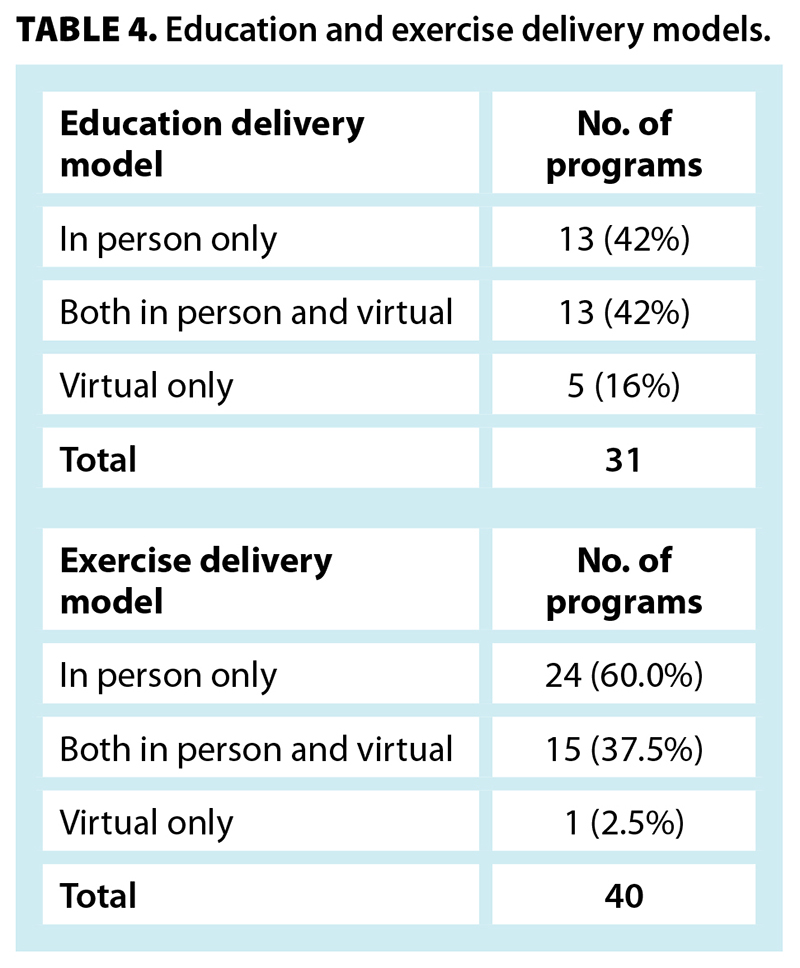 Most (28/43; 65%) cardiac rehabilitation programs offered both exercise and education. Several (12/43; 28%) programs offered an exercise component but did not have their own education component, so they sometimes referred patients to a different program for educational needs. Seven percent (3/43) of cardiac rehabilitation programs offered education only. Exercise and education were offered in person and/or virtually [Table 4]. Virtual cardiac rehabilitation care delivery included synchronous (“real-time”) virtual exercise sessions and/or individualized self-directed exercises. Finally, 25% (10/40) of cardiac rehabilitation programs that offered an exercise component also offered a remote monitoring/virtual option.
Data collection
Fifty-one percent (22/43) of cardiac rehabilitation programs collected operational site-specific data electronically.
Discussion
This study identified four key findings regarding the current state of cardiac rehabilitation services in BC and Yukon. First, most cardiac rehabilitation programs accept patients who have most or all established guideline indications for participation in cardiac rehabilitation, as well as patients deemed to be at high risk of adverse cardiovascular events with exercise.
Second, slightly less than half of programs offer all six cardiac rehabilitation program core components surveyed. More information is needed to understand the reasons for this variation across programs. In the current literature, core components of cardiac rehabilitation programs vary slightly. They are used by cardiac rehabilitation programs as a foundation for developing their services, while considering local factors involved.[1,13,14]
Third, cardiac rehabilitation programs in BC are run by various types of health professionals. Multidisciplinary teams are present in most programs and are slightly more common in urban cardiac rehabilitation programs. However, only about half of programs included a medical director. The Canadian Association of Cardiovascular Prevention and Rehabilitation’s guidelines[1] identify key roles that should be integrated into all cardiac rehabilitation programs, including a medical director, program manager, administrative assistant, health educator, and exercise therapist. Cardiac rehabilitation program capacity, services offered, complexity of patient population served, and human and program resources impact the number and type of health care professionals within each program.
Last, many cardiac rehabilitation programs reported barriers to access, including inequitable geographic distribution that favors urban centres, limited virtual services, limited availability of languages other than English, and out-of-pocket expenses. The Canadian Association of Cardiovascular Prevention and Rehabilitation’s recommendations[1] indicate that cardiac rehabilitation should be equally accessible to all patients after a cardiac event, particularly people from groups that are less likely to access this service (e.g., people from underrepresented groups or who have lower socioeconomic status, older age groups, women, persons from rural communities, those with mental and physical health comorbidities). Based on the survey results, there is insufficient and inequitable access to cardiac rehabilitation in BC.
The results indicate the need for provincial service delivery models and improved information availability to address unmet demand, instability of existing cardiac rehabilitation services, and limited adoption of virtual health.
Unmet demand
Cardiac rehabilitation programs reported that they are unable to meet demand. When considering the complete list of cardiac rehabilitation indications, there are inadequate data at the provincial level to understand that unmet need and the opportunities to build on existing services.
Instability of existing services
Cardiac rehabilitation service delivery lacks continuity. An internal cardiac rehabilitation program inventory update indicated that more than 20 cardiac rehabilitation programs have closed since 2017, mostly programs that depended on limited teams to provide services (unpublished data). The high rate of closure of cardiac rehabilitation programs and the wide variation in services offered across health authorities leads to a constantly changing inventory of operational cardiac rehabilitation programs, which makes it challenging for health care providers to stay up to date. This highlights the need for a more sustainable cardiac rehabilitation model in BC. Contact information for BC cardiac rehabilitation programs is provided in the Pathways Community Service Directory.
Limited adoption of virtual health
The COVID-19 pandemic had a large impact on all cardiac rehabilitation programs, which resulted in a rapid shift in delivery models from in-person to virtual care. Effective cardiac rehabilitation can be delivered using a virtual approach and can have similar patient outcomes and safety as in-person, centre-based programs.[15] To help address gaps in care and improve cardiac rehabilitation delivery, existing cardiac rehabilitation programs are encouraged to develop sustainable virtual options.[15] This will improve access to this essential service, especially for those in rural communities.
Opportunity for provincial service delivery model
A comprehensive provincial service delivery model, aligned with cardiac rehabilitation guidelines, should include evidence-based clinical practice, defined program models, access benchmarks, operational structures and processes, and performance outcome measurements. Such a model is needed to provide guidance and a road map for regions to standardize existing cardiac rehabilitation programs, develop new cardiac rehabilitation programs, and contribute to the development of a sustainable provincial cardiac rehabilitation model.
Need for improved information
Wait times, volumes, and access measures: The latest Canadian Cardiovascular Society access benchmark recommends that patients access cardiac rehabilitation services within 30 days of discharge.[16] Provincially, accurate numbers of patients who are accessing cardiac rehabilitation services and their wait times are unknown. This makes it impossible to determine if this benchmark is being met and the full extent of service demand and unmet need. In 2021, the Office of the Auditor General of Ontario[17] recommended collecting information on outpatient cardiac rehabilitation services to provide access to appropriate rehabilitation for patients who have cardiac disease and to better understand referral patterns and the reasons for program completion. A similar approach within BC would help in determining wait times, patient volumes, and program completion rates, and would support effective health care system planning.
Performance/outcome measurement: There is a lack of data to measure the effectiveness of cardiac rehabilitation services in BC. In 2013, the Canadian Cardiovascular Society[18] developed a series of cardiac rehabilitation and secondary prevention quality indicators, which included the number of inpatients referred to a cardiac rehabilitation program, the wait time from referral to enrollment, patient self-management education, increase in exercise capacity, and emergency response strategy.
The Canadian Association of Cardiovascular Prevention and Rehabilitation has also published several performance measures for the delivery of cardiac rehabilitation services. Data on provincial cardiac rehabilitation outcomes, performance, and resource use are required to more accurately determine the current state of cardiac rehabilitation services and to support their future development.[1]
Future considerations
Initial provincial considerations for action include the following:
- Improve awareness of operational cardiac rehabilitation programs by disseminating a current cardiac rehabilitation program directory.
- Integrate the planning and delivery of cardiac rehabilitation services into overall cardiac care services.
- Engage with provincial cardiac rehabilitation experts, including representation from Indigenous partners and people with lived experience, to develop a culturally safe, equitable, and high-quality cardiac rehabilitation service model.
- Address the data void to inform investments, leverage existing services, and integrate hybrid models using expanded virtual options for care delivery.
Study limitations
This study has several limitations that are inherent to a cross‑sectional survey design, including the potential for response bias. However, this risk is partially mitigated by the 100% response rate, which enhances the completeness of the results.
Conclusions
Cardiac rehabilitation programs within BC face significant challenges that are resulting in gaps in services and variation in access. Regional health authorities and community programs are working to provide services despite these challenges and limited resources. Our environmental scan identified opportunities to raise awareness of current services; support future engagement; and inspire health care professionals, health system leaders, policymakers, and people with lived experience in BC to take action to improve cardiac rehabilitation services.
Competing interests
Dr Moulson serves on the advisory board of and/or has received honoraria from Amgen, GSK (formerly GlaxoSmithKline), HLS Therapeutics, Novartis, Novo Nordisk, and Sanofi. The other authors declared no competing interests.
This article has been peer reviewed.

This work is licensed under a Creative Commons Attribution-NonCommercial-NoDerivatives 4.0 International License.
References
1. Canadian Association of Cardiovascular Prevention and Rehabilitation (CACPR). Canadian guidelines for cardiac rehabilitation and cardiovascular disease prevention: Translating knowledge into action. 3rd ed. Winnipeg, MB: CACPR; 2009. Accessed 15 November 2022. https://cacpr.ca/Guidelines.
2. Anderson L, Oldridge N, Thompson DR, et al. Exercise-based cardiac rehabilitation for coronary heart disease: Cochrane systematic review and meta-analysis. J Am Coll Cardiol 2016;67:1-12. https://doi.org/10.1016/j.jacc.2015.10.044.
3. Taylor RS, Brown A, Ebrahim S, et al. Exercise-based rehabilitation for patients with coronary heart disease: Systematic review and meta-analysis of randomized controlled trials. Am J Med 2004;116:682-692. https://doi.org/10.1016/j.amjmed.2004.01.009.
4. Clark AM, Hartling L, Vandermeer B, McAlister FA. Meta-analysis: Secondary prevention programs for patients with coronary artery disease. Ann Intern Med 2005;143:659-672. https://doi.org/10.7326/0003-4819-143-9-200511010-00010.
5. Lavie CJ, Milani RV, O’Keefe JH, Lavie TJ. Impact of exercise training on psychological risk factors. Prog Cardiovasc Dis 2011;53:464-470. https://doi.org/10.1016/j.pcad.2011.03.007.
6. Alter DA, Yu B, Bajaj RR, Oh PI. Relationship between cardiac rehabilitation participation and health service expenditures within a universal health care system. Mayo Clin Proc 2017;92:500-511. https://doi.org/10.1016/j.mayocp.2016.12.024.
7. Grace SL, Bennett S, Ardern CI, Clark AM. Cardiac rehabilitation series: Canada. Prog Cardiovasc Dis 2014;56:530-535. https://doi.org/10.1016/j.pcad.2013.09.010.
8. Cardiac Services BC. Cardiac rehabilitation in BC: A coordinated approach. Summary report. 2017.
9. Heart and Stroke Foundation of Canada. Falling short. How Canada is failing people with heart failure—and how we can change that. 2022 spotlight on heart failure. Accessed 8 July 2026. www.hs-heart-failure-report-2022-final.pdf.
10. American Association of Cardiovascular and Pulmonary Rehabilitation. Guidelines for cardiac rehabilitation programs. 6th ed. Champaign, IL: Human Kinetics; 2020. Accessed 6 August 2025. https://us.humankinetics.com/products/guidelines-for-cardiac-rehabilitation-programs-6th-edition-with-web-resource.
11. Barrette V, Mackay K, Munday F, et al. The current state of cardiac rehabilitation in B.C. and the Yukon: Mending the gaps. Poster presented at the Canadian Cardiovascular Congress, Vancouver, BC, 24–27 October 2024.
12. Cardiac Services BC. CVI.Source [database]. Accessed 23 January 2024.
13. Balady GJ, Williams MA, Ades PA, et al. Core components of cardiac rehabilitation/secondary prevention programs: 2007 update: A scientific statement from the American Heart Association Exercise, Cardiac Rehabilitation, and Prevention Committee, the Council on Clinical Cardiology; the Councils on Cardiovascular Nursing, Epidemiology and Prevention, and Nutrition, Physical Activity, and Metabolism; and the American Association of Cardiovascular and Pulmonary Rehabilitation. Circulation 2007;115:2675-2682. https://doi.org/10.1161/CIRCULATIONAHA.106.180945.
14. Thomas RJ, Beatty AL, Beckie TM, et al. Home-based cardiac rehabilitation: A scientific statement from American Association of Cardiovascular and Pulmonary Rehabilitation, the American Heart Association, and the American College of Cardiology. Circulation 2019;140:e69-e89. https://doi.org/10.1161/CIR.0000000000000663.
15. Moulson N, Bewick D, Selway T, et al. Cardiac rehabilitation during the COVID-19 era: Guidance on implementing virtual care. Can J Cardiol 2020;36:1317-1321. https://doi.org/10.1016/j.cjca.2020.06.006.
16. Canadian Cardiovascular Society. The Canadian Cardiovascular Society quality indicators e-catalogue: Quality indicators for cardiac rehabilitation and secondary prevention. Last updated 4 September 2013. Accessed 23 January 2024. https://ccs.ca/wp-content/uploads/2022/04/Indicator_CR.pdf.
17. Office of the Auditor General of Ontario. Value-for-money audit: Cardiac disease and stroke treatment. December 2021. Accessed 23 January 2024. www.auditor.on.ca/en/content/annualreports/arreports/en21/AR_Cardiac_en21.pdf.
18. Grace SL, Poirier P, Norris CM, et al. Pan-Canadian development of cardiac rehabilitation and secondary prevention quality indicators. Can J Cardiol 2014;30:945-948. https://doi.org/10.1016/j.cjca.2014.04.003.
Ms Barrette is a provincial clinical nurse specialist at Cardiac Services BC (CSBC). Ms Mackay is a senior director of provincial quality, research, and integrated care at CSBC. Dr Grace is a resident in the Department of Medicine at the University of British Columbia. Ms Hussain is a coordinator of provincial system planning at CSBC. Dr Swiggum is a cardiologist at Island Health, a clinical associate professor at UBC, and a director on the Doctors of BC Board. Dr Moulson is a medical director at the Centre for Cardiovascular Health and Prevention at the Dilawri Cardiovascular Institute, a preventive and sport cardiologist at SportsCardiologyBC, and a clinical assistant professor at UBC.
Corresponding author: Ms Valerie Barrette, valerie.barrette@phsa.ca.