
November
Issue: BCMJ,
vol. , No. , ,
Pages
Diabetes mellitus is an important cause of death, illness, and disability across Canada. It affects approximately 5% of adults, which means more than 1 million Canadians.[1,2]
References
Issue: BCMJ,
vol. , No. , ,
Pages
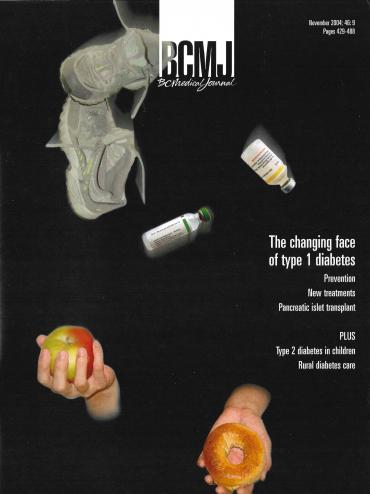
Type 1 diabetes (T1D, previously called insulin-dependent or juvenile diabetes) is usually the result of T cell - mediated autoimmune destruction of the insulin-producing beta cells of the pancreas.[1] While T1D affects males and females equally, there are very significant worldwide variations in prevalence, with people of European descent being most affected.
References
Issue: BCMJ,
vol. , No. , ,
Pages
By:
It has been 2 years since I was required to retire from medicine following a ruptured abdominal aortic aneurysm with significant sequellae. Although I am officially “permanently disabled,” I have much gratitude for my life and the quality of life I enjoy. Reflecting on all the events of the last 2 years, there are several thoughts that I wish to share with you.
I am extremely grateful to the BCMA PDI program and MD Management for their financial advice over the years, and for referring me to a disability insurance analyst.
Issue: BCMJ,
vol. , No. , ,
Pages
By:
As a physician retired for 15 years after 23 years of practice at the Student Health Service of UBC, I couldn’t agree more with this editorial [BCMJ 2003;45(6):246].
The increasing difficulty I experienced in finding a general internist to whom I could refer a patient became more and more frustrating for both me and my patients. Which specialist would sort out the problem facing me?