By:
On 1 June of this year, WorkSafeBC launched a new contract for physiotherapy services. The new model, developed in cooperation with the Physiotherapy Association of BC, changed from a fee-for-visit service to a block-funding service. It now places a greater focus on workers' functional abilities, their critical job demands, and the goal of safely returning them to work.
Under the new system, injured workers continue to receive physiotherapy services as required, and the therapist determines the most clinically appropriate frequency of treatment.
hidden
I find September to be bitter sweet. It's a time to say goodbye to summer months spent enjoying family holidays and warm weather, but it's also a time to look ahead and move forward. September signifies a return to the rat race, a time when both work and personal events ramp up once again, but it's also a month that brings the promise of change--a change in seasons and weather, and a change in one's daily routines. This fall I hope to see another significant change--an increase in our engagement with specialists and facility-based physicians.
We have read the commentary from Drs Avery, Boyd, Iglesias, Johnston, Klein, Ruddiman, and Woollard [BCMJ 2014;56:326-327] with some concern. We accept that change engenders fear, but we disagree with the assertions made. The privileging dictionary project is only one of a larger suite of projects to address credentialing and privileging activities across the health system. In responding to the concerns raised we appeal to hope and to a better future for the physicians of this province.
hidden
We fully support the decision to improve the self-regulation of our profession and the resultant reassurance of the public about doctors' efficacy. We offer some thoughts on how the provincial Privileging Standards Project might be made more relevant and effective, moving from permissive to criteria-based privileging, for rural medicine. We also anticipate unintended consequences from the project's reliance on numbers--loss of maternity, anesthesia, surgery, and emergency services in rural BC.
hidden
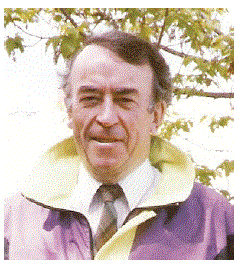
Dr Bill McLaren died peacefully on 20 July 2014 at 93 years of age. He was a remarkable man with immense energy and a dry sense of humor. Together, he and his wife, Pat, lived life to the fullest. They loved people and had friends everywhere. They traveled extensively and always seemed to know someone no matter where they went.