By:
Thank you for this opportunity to respond to Dr Szasz’s letter. He is simply offering an opinion about my article and I have no problem with his comments. In many ways he is right. Maintaining a demanding profession and a fulfilling relationship can be challenging for anyone and his Superman/Superwoman metaphor is often fitting. This is why I wrote the article.
—Gordon J.D. Cochrane, Ed. D., R. Psych.
Vancouver
It was with some weariness that I read the article by Gordon J.D. Cochrane, “Physicians and their primary relationships: How to be successful in both personal and professional realms” [BCMJ 2019;61:208-211]. I understood the author’s concern that physicians may drag their doctor-patient communication methods home, causing stress and conflict and thus interfering with the intimate level of communication needed in primary relationships.
Physicians, as a rule, don’t bother to vote in elections for organizations that deal with the practice of medicine, so we shouldn’t complain about the results of those elections.
Organizations suffer two common diseases: regulatory capture and mission creep. In the former, the organization that is supposed to look out for all looks out for only a few. In the latter, the organization takes on more and more work outside its original mandate, which costs more and more. The institutions concerned with the practice of medicine (the College, CMPA, Doctors of BC, etc.) are no different.
Inguinal and umbilical hernias are two of the most common reasons a primary care patient may need referral to a general surgeon. History and physical examination are usually sufficient to make the diagnosis. Patient symptoms include pain, burning, heaviness, or aching in the groin or umbilical region. It may be worse at the end of the day or after prolonged activity. The patient may also report a bulge that often disappears in the prone position.
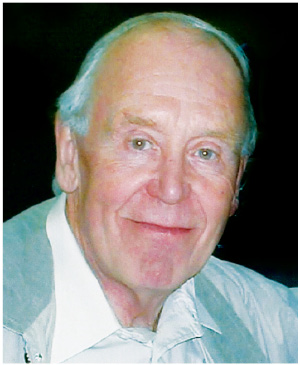
After a long, distressing illness, Dr Geoff Parker-Sutton died suddenly with his family around him on 14 March 2019. Geoff was born and grew up in Castle Donington, a small village in central England. On leaving school in 1948 he was required, as all youth were at that time, to serve 2 years of national service, and he chose to do this in the Royal Air Force (RAF).