
Resilience: Beyond the stiff upper lip
Issue: BCMJ,
vol. 68, No. 4, May 2026,
Page 125 President's Comment
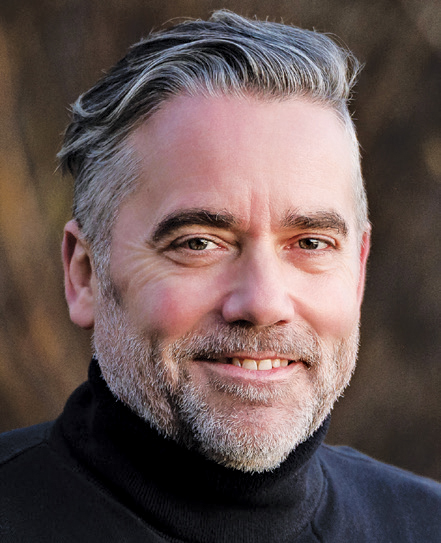 |
| Dr Adam Thompson |
Like many of you, I come from a generation of physicians who were taught—implicitly and explicitly—to keep a stiff upper lip. Medicine was demanding, exhausting, and emotionally heavy, but those realities were framed as part of the job. Stress, burnout, and moral injury came with the territory, and the unspoken expectation was that you simply got on with it. You worked harder, stayed later, and carried on. We’ve all seen where that approach has led us.
It has produced extraordinary clinicians, but it has also come at a cost. Too many colleagues have quietly struggled. Too many have left practice earlier than planned. Too many have felt isolated, depleted, or disconnected from the very work that once gave them meaning. If resilience is defined as the ability to keep going at all costs, then perhaps it’s time to revisit what we mean by the word.
Over the years, I’ve developed a framework I refer to as the Thompson Five. It reflects my belief that physicians truly thrive—not just survive—when they pay attention to five interconnected domains. Ignore one, and the whole structure becomes unstable.
Self
This is the foundation of everything else. If we are not okay, it is difficult—if not impossible—to ensure that others are. That may sound obvious, but for many of us, it runs counter to how we were trained. We learned to put ourselves last, to push through fatigue, and to normalize levels of stress that would be unacceptable in almost any other profession.
Caring for oneself is not indulgence or weakness; it is a professional responsibility. It means acknowledging limits, attending to physical and mental health, and creating space for rest and reflection. When we neglect this domain, the consequences inevitably ripple outward—to our families, our patients, and our colleagues.
Family
Family looks different for each of us. It may be a partner, children, parents, close friends, or chosen family. Whatever form it takes, family represents safety, grounding, and perspective.
For me, that place of safety is my wife, Emma, and our sons, William and Ben. I couldn’t go out and do the work I do—clinically or as a leader—if I didn’t know I belonged to them. Family reminds us that we are more than our professional roles. It anchors us when medicine feels overwhelming and celebrates us when work alone cannot.
When family relationships are neglected, resilience erodes. When they are nurtured, they become a powerful source of strength.
Patients
The trusted relationships we have with our patients are at the heart of why most of us chose medicine in the first place. Each of us entered this profession because we care and want to improve people’s lives.
When systems fail, when workloads become unsustainable, and when administrative burdens crowd out human connection, it is often these relationships that suffer first. And when they do, our sense of purpose is threatened. Protecting time, space, and energy for meaningful patient relationships is not just good care; it is also a vital component of physician well-being.
Community
Community can take many forms. It may be a group of physician colleagues, a department, a hospital, a professional organization, or the broader community in which we live and work. What matters is the sense of belonging and shared purpose.
Medicine has traditionally rewarded independence, but resilience is rarely built alone. Through community, we share burden, learn from one another, and find collective strength. With the power and commitment of community, we can effect change that none of us could achieve individually.
The system of care
Finally, there is the system itself. As physicians, we want a functional system of care—for our patients and for ourselves. When the system is fragmented, under-resourced, or misaligned with clinical realities, moral injury follows. While medical leaders have a particular responsibility to advocate for and help build better systems, this work does not belong to leaders alone. From whatever position we hold, each of us has a role to play in identifying problems, proposing solutions, and pushing for improvement.
Resilience, then, is not about stoicism or endurance. It is about balance, connection, and shared responsibility across these five domains. It is my belief that if we hold these five columns in balance, we will not only survive, but also thrive in the work we do. Keep well.
—Adam Thompson, MD
Doctors of BC President

This work is licensed under a Creative Commons Attribution-NonCommercial-NoDerivatives 4.0 International License.