By: Kevin Elwood, MD
Dr Raja Abboud, 1936–2025
Issue: BCMJ,
vol. 67, No. 7, September 2025,
Page 260 Obituaries
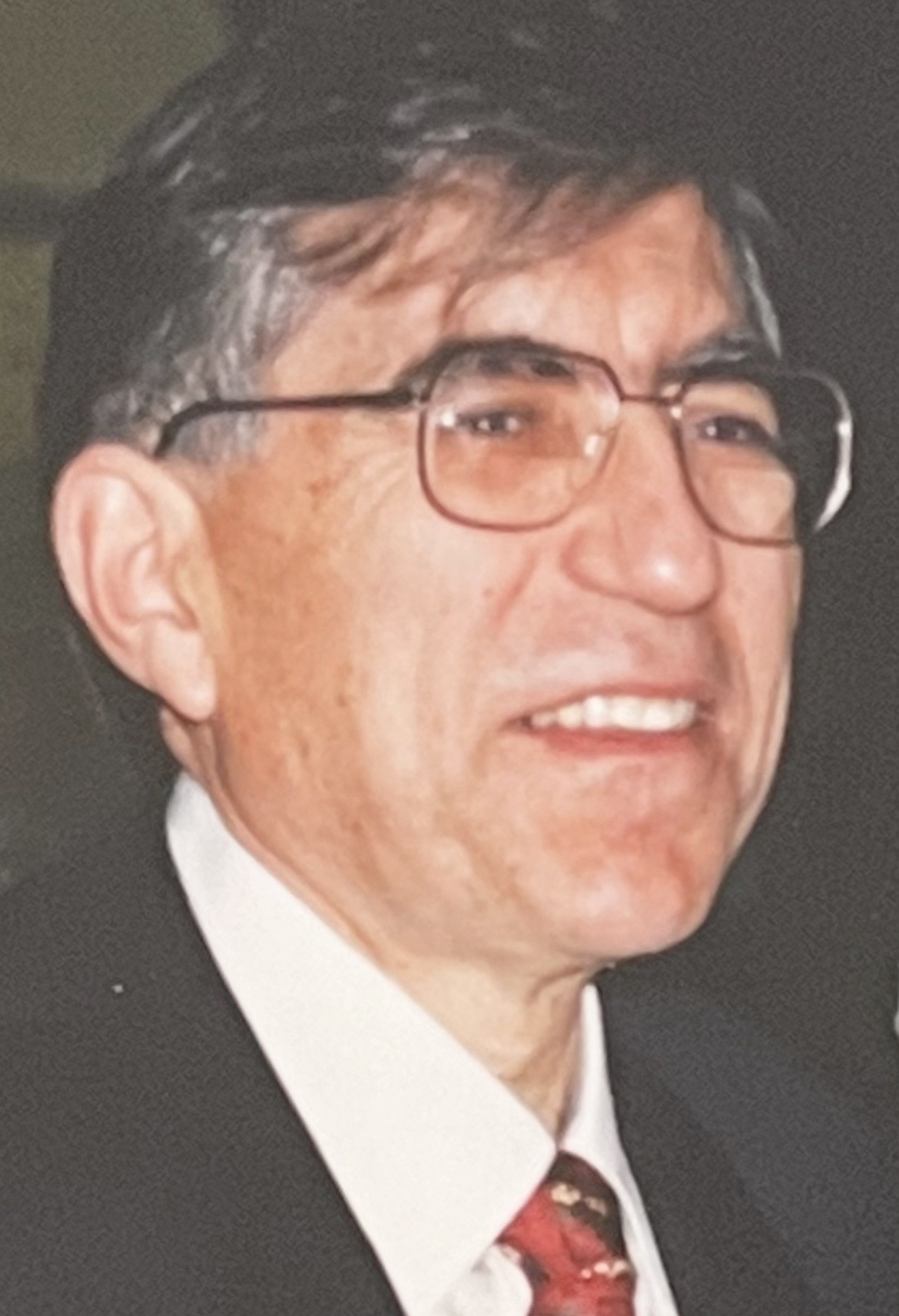
Dr Raja Abboud passed away on 9 January 2025 in the confines of Vancouver General Hospital, where he spent the majority of his career working as a respirologist. He was born in Palestine and did his undergraduate degree at the American University of Beirut, obtaining his MD in 1957 at age 21. He had managed to gain acceptance into the university at age 14 by successfully misrepresenting his true age. He spoke English, French, and Arabic. In 1961, he became a resident physician at Bellevue Hospital in New York City, moving to the University of Pennsylvania in 1967 to complete a postdoctoral fellowship in physiology and, later, residency in internal medicine. He obtained his FRCP in respiratory diseases and his board certification in internal medicine in 1972, arriving in Vancouver the same year, and becoming an associate professor in 1981.
Apart from being an active clinician, he was in charge of the lung function laboratory at Vancouver General Hospital for many decades and was responsible for upgrading the lab with computerized equipment, as well as expanding diagnostic testing to include lung mechanics, exercise testing, and bronchial inhalation challenges. As chair of the then BCMA subcommittee on accreditation of pulmonary function labs, he organized a quality control program for hospital lung function labs following demonstration that the coefficient of variation was narrow in some hospitals but unacceptably large in others.
Raja was interested in research throughout his career, including the pathogenetic mechanisms of emphysema, exploring the contribution of alpha-1 proteinase inhibitors and neutrophil elastase release. These were difficult studies to complete, requiring multiple bronchoalveolar lavages. He was a gifted physiologist, a dwindling breed in respiratory medicine.
I became acquainted with Raja in 1977, when I received a telegram that read “Application successful. Please cable acceptance.” I was in Ireland at the time and decided to pursue a fellowship in respiratory medicine, with every intention of returning to my home country. I still have the telegram, and I am listed on his CV as his first fellow. He was very kind to me when I arrived in Vancouver and would often invite me to have dinner with him and his mother, who introduced me to her wonderful tabbouleh. Conversations were conducted in French and English, with a little Arabic thrown in for good measure. We would also go to symphony orchestra concerts when he had a spare ticket and occasionally played tennis and skied together.
Raja was, at times, challenging to work with. His office was postapocalyptic, the very definition of organized chaos. He also had an unusual concept of time. He would frequently arrive 20 minutes late to meetings and would think nothing of starting the evening ward rounds at 6 p.m. He even managed to be late for his own wedding—not the best way to start a lifelong relationship. Serendipity had shined on him when he was the subject of a wrong number phone call. The caller was looking to contact another Abboud, but through conversation, they discovered they had very similar backgrounds. They would eventually meet, establish a relationship, and marry.
Sadly, he spent his latter years in slow, inexorable cognitive decline—a cruel blow for someone so intellectually gifted. Through multiple challenges and eventual complete dependence, he was lovingly cared for in his home by his wife, Afifi, and his son, Theodore. A wonderful celebration of his life was attended by many of his former colleagues, all of whom had a story to share. The respiratory community has lost a kind, compassionate, and modest colleague who was devoted to caring for his patients. May he finally find the peace he so richly deserves.
—Kevin Elwood, MD
Vancouver
hidden
 |
| This work is licensed under a Creative Commons Attribution-NonCommercial-NoDerivatives 4.0 International License. |