Dr Michael C. Klein, 1938–2026
Issue: BCMJ,
vol. 68, No. 7, September 2026
|
Pages 259-260 |
Obituaries
| doi.org/10.66794/2c4d
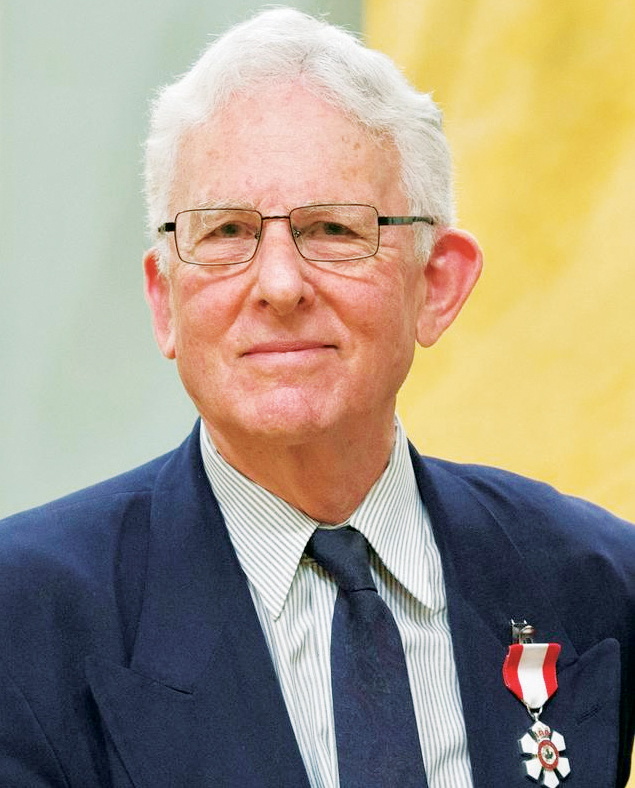
Dr Michael C. Klein died on 10 June 2026, 1 week shy of his 88th birthday.
Michael was a pioneering family physician and medical researcher who had a lasting impact on maternity care in Canada and beyond. He was head of a McGill University teaching centre and the Department of Family Medicine at the Jewish General Hospital in Montreal for 17 years and head of the Department of Family Practice at BC Children’s and Women’s Hospitals in Vancouver for 10 years. He was professor emeritus of family practice at the University of British Columbia and senior scientist emeritus at the BC Children’s Hospital Research Institute in Vancouver. For his work in placing maternity care at the heart of family medicine, he was appointed a member of the Order of Canada.
Michael was born in Los Angeles, California, the son of Anne and Phil Klein, who raised him in a socialist, secular Jewish home, surrounded by art and activism. His father was a cartoonist and among a small group who started the union at the Walt Disney Company and led a long strike there just prior to the US joining World War II. One of Michael’s earliest memories was sitting on a motorcycle outside the gates of the Walt Disney Studios in Burbank, California, at 3 years of age and shouting “Scab!” at everyone who attempted to enter. After the strike, his family returned to the East Coast, and Michael grew up mainly in Newark, New Jersey.
Michael and his wife, Bonnie, to whom he was married for 59 years, immigrated to Canada twice. The first time was under duress in 1967 as Vietnam War resisters, when Michael refused to serve as an officer in the United States Army Medical Corps. The second time was by choice in 1975, this time drawn by Michael’s desire to work in Canada’s public health care system and by the National Film Board of Canada, where Bonnie spent many years as a documentary filmmaker. In both cases, Canada beckoned because of public policy choices that distinguished this country from our southern neighbors.
Michael did his undergraduate degree in political science at Oberlin College in Ohio and then attended medical school at Stanford University in California. While still in medical school, he lived and practised medicine for many months in both Chiapas, Mexico, and Ethiopia. His early experience working with midwives in Ethiopia—delivering babies using techniques for natural pain relief and without routine episiotomy—were formative, leading him to question many standard but unjustified procedures in Western maternity care.
Michael made many unconventional decisions as a result of this insight, transitioning from a specialization in pediatrics and newborn care to become a family physician with a lifelong focus on low-tech birth. Michael delighted in being an accomplice to the miracle of new life. He delivered—or, as he always said, “caught”—thousands of babies. Deeply concerned about the overmedicalization of birth, he was driven to transform the medical profession’s approach to bringing new humans into the world so that it reflected the joy, strength, and health that are at the heart of pregnancy. He played a key role in the legalization of midwifery in BC and other provinces (much to the dismay of many other doctors) and championed the role of birth doulas. He loved bumping into the babies he helped deliver as adults. It happened all the time.
Over his career, he conducted groundbreaking research, mainly on the overuse of medical interventions during childbirth (particularly cesarean sections and episiotomies). Dr Vania Jimenez, a longtime colleague, observed that “Dr Klein chose to follow the path of science and research to investigate the validity of his insights about birth, leading to profound changes in how we practise.” Michael believed deeply in mentorship and spent his last energies co-writing papers with younger researchers. He published until the very end, with a paper appearing only a month before his death and another posthumously.
Michael suffered from an assortment of neurological conditions over his last years, causing considerable pain, loss of balance, and ultimately great difficulty speaking and moving. As a doctor and researcher, he had spent much of his career solving medical mysteries in others, much like a detective. Yet in a cruel paradox, neither he nor any of his devoted doctors could solve his own. He died at home, surrounded by family and friends.
Those interested in learning more about Michael’s purpose-driven life can do so by reading his 2018 memoir, Dissident Doctor: Catching Babies and Challenging the Medical Status Quo.
Michael leaves behind his wife, Bonnie; his children, Seth, Naomi, and Misha; his daughter-in-law, Christine Boyle, and son-in-law, Avi Lewis; and his grandchildren, Zoe, Toma, Aaron, and Theo.
—Naomi Klein
Vancouver
—Seth Klein, MA
Vancouver

This work is licensed under a Creative Commons Attribution-NonCommercial-NoDerivatives 4.0 International License.