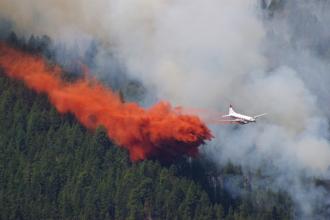
Wildfire smoke poses public health risks for populations both near to and far from the direct threat of fire. Here we offer evidence-based responses to clinicians’ questions on the health effects of smoke, and highlight tools for situational awareness and public preparedness during wildfire events.
We interrupt this program to bring you a special news bulletin. The Japanese have attacked Pearl Harbor, Hawaii, by air . . .
—Radio announcer
The music at the outdoor skating rink in Edmonton, Alberta, resumed playing “I’ve Got a Lovely Bunch of Coconuts” as many skaters headed inside. It was Sunday afternoon, 7 December 1941, and we all changed our skates and headed home to hear about the tragedy in detail.
A virtual reality game that helps youth deal with cancer treatment is the latest pain management tool being developed in SFU’s Pain Studies Lab. The game was created by two students in the university’s School of Interactive Arts and Technology who spent time in hospital as youth, Mr Henry Lo and Ms Janice Ng.
During their research the students discovered that most pain studies involve adults rather than teenagers and youth, while it is younger patients who often experience pain and boredom when they are stuck in bed, and discomfort can be more extreme at a younger age.
Scientists at the University of British Columbia and Vancouver Coastal Health have proven that multiple sclerosis can be caused by a single genetic mutation—a rare alteration in DNA that makes it very likely a person will develop the more devastating form of the neurological disease.
A study led by Vancouver Coastal Health Research Institute (VCHRI) scientist Dr John Best examined the relationship between cognitive decline and gait speed (measured in metres per second) and found that a significant decrease in gait speed is a possible predictor of future cognitive decline among older adults.