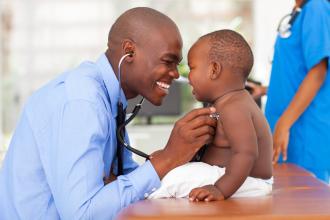
Zero to Three, the National Centre for Infants, Toddlers, and Families, defines infant mental health as a continuum, ranging from a state affected by social and emotional problems and disorders to complete social and emotional wellness—an ability to form satisfying relationships with others and to play, communicate, learn, and experience the full spectrum of human emotions. Infant mental health develops in the context of family, community, and cultural expectations for very young children. [1]
As we continue to learn about the complexity and elegance of infant development, we are also faced with acknowledging that certain risks and disorders are common during this early stage of life. Infant mental health is a relatively new area of study. In essence, it encompasses the social and emotional well-being of infants and young children. The age group served is often defined as birth to age 3, but many services care for children up to age 5. Infant mental health services are provided in a variety of settings and rely on a multidisciplinary approach.
Posttraumatic stress disorder (PTSD) in infants and young children is a relatively new concept. Awareness of this phenomenon has grown out of knowledge of PTSD in adults and older children, in combination with case reports highlighting unique aspects of trauma in small children. There is relatively little research on this subject, but the field is growing. At this time, we know that:
• PTSD does occur in the preverbal and early verbal years.
• PTSD has some unique presenting features related to the developmental level and other contextual features of the child’s life.
The BC Medical Journal hosted its first CME cruise conference in February, and by all accounts the event was a success. The primary goal of the conference was to raise money for the BCMJ; other goals were to provide a top-notch general practice update, raise the profile of the Journal, and to provide an opportunity for attendees to learn about medical publishing. The money raised will go directly back into the productions costs of the Journal.