The patient behind the chart
Issue: BCMJ,
vol. 68, No. 9, November 2026
|
Page 305 |
Editorials
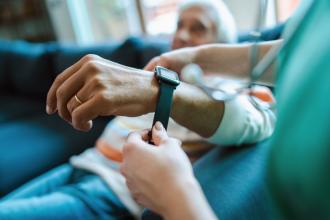
I know many of my patients’ medical charts remarkably well. I know when their last mammogram was done, how their A1c has changed over the years, which medications they can’t tolerate, and which investigations still need follow-up. But sometimes I find myself wondering whether I know enough about the person whose chart I know so well.
Family medicine is built on the foundation that knowing the patient matters. Yet, as the need for thorough documentation increases, what is often sacrificed is the amount of time you are able to spend getting to know your patients. I wonder if we are becoming better at knowing the chart but not necessarily better at knowing the person.
There are many reasons our documentation has become more detailed. We need accurate records for continuity of care, specialist referrals, insurance company requests, WorkSafe and ICBC documentation, billing, regulatory requirements, and medicolegal protection. Thorough documentation is essential, and I am certainly not suggesting that we should be less thorough.
But documentation takes more than time. It also takes attention. During a typical visit, I am listening to and examining a patient while forming a differential diagnosis, considering treatment options, checking medications, reviewing previous investigations, ordering tests, and making sure my notes accurately reflect what happened. By the end of the visit, I want the patient to leave safely and with a clear understanding of the plan. Despite the hundreds of things going on in my head during the visit, I often wonder about what I did not ask.
A medical chart can tell us a great deal, but it can never tell us everything. It may show that a patient has diabetes, depression, hypertension, or chronic pain. It may show that they missed appointments, stopped taking a medication, or declined an investigation. What it may not tell us is why.
Maybe the patient is working two jobs and cannot easily make appointments. Maybe they are caring for an elderly parent and putting that person’s needs ahead of their own. Maybe they cannot afford the medication. Maybe they had a bad experience with the health care system and have become reluctant to seek care. Something that looks like “non-adherence” in the chart can make much more sense once we understand what is happening in the rest of a patient’s life.
That kind of understanding has always been one of the strengths of family medicine. Over time, we learn things that are difficult to capture in a note: what matters to someone, what they are worried about, who they rely on, and what is happening in their family or at work. These details may not appear on a problem list, but they often shape how we understand a patient’s health and how we care for them.
I am certain that I provide evidence-based and comprehensive care to my patients. I know patients appreciate the fact that their doctor is competent, organized, and respectful of their time. But I also hope my patients feel listened to and feel that I know them as a whole person. With the time constraints of family medicine, I sometimes feel that I am not allowing enough time to do so thoroughly.
We have access to more information now than ever before. We have electronic medical records, specialist reports, hospital records, and PharmaNet readily available. We also have increasingly powerful artificial intelligence capable of summarizing years of medical history in seconds. These tools can help us practise better medicine. But having more information about someone is not the same as understanding them.
Perhaps that is where artificial intelligence may eventually help the most. Its greatest contribution to family medicine may not be helping us create longer or more detailed notes. It may simply be giving us some of our attention back. The question is, what will we do with that time?
If technology allows us to finish documentation more quickly, maybe we can listen a little longer. Maybe we can become a little more curious about the person sitting in front of us. Of course, there is also the possibility that every gain in efficiency will be filled with more tasks, more paperwork, and more patients. I hope that is not where we end up.
Family medicine has always been at its best when we understand illness in the context of someone’s life. That understanding takes time, attention, and trust. The patient sitting across from us is more than a list of problems, a collection of test results, or a well-documented encounter. Their health is intertwined with every aspect of their lives.
I hope I continue to know my patients’ charts well. But years from now, I hope my patients feel that I also knew the person behind the chart well, and that knowing them helped me care for them better.
—Yvonne Sin, MD

This work is licensed under a Creative Commons Attribution-NonCommercial-NoDerivatives 4.0 International License.