By: Elsie Wang, BSc [2] Joban Bal, MD [3] Philip Edgcumbe, MD, PhD [4]

In the face of increasing demands on Canada’s health care system, medical trainees across British Columbia are voicing urgent and practical concerns about the future of care delivery.
In February 2024, Prime Minister Justin Trudeau and Minister of Health Adrian Dix gave health care policy speeches at the annual Vancouver Medical Association Osler Dinner. To help give medical trainees a voice at the health care policy decision-making table, we invited UBC medical students and resident physicians to submit questions and policy priorities that they would like presented to Prime Minister Trudeau and Minister Dix at the Osler Dinner. The key principles and priorities of the 61 medical students and 19 residents who responded are shared in this letter.
Foremost among medical trainees’ federal-level concerns was health care accessibility, with an emphasis on reducing wait times for specialist consultations, emergency care, and surgical procedures. Trainees also highlighted the importance of improving access in rural, remote, and underserved communities, especially in the context of mental health services for youth and marginalized populations.
Trainees called for national strategies to better prepare for future pandemics, strengthen health care infrastructure, and guide the ethical integration of emerging technologies such as artificial intelligence into clinical care. Concerns were raised about transparency and accountability in health care spending, along with calls for regulatory reforms to ensure equitable and efficient use of health care dollars.
Many students advocated for increased support for medical trainees, including tuition relief, student loan forgiveness, and programs to prevent burnout. Concerns were prominent about the brain drain of Canadian medical graduates leaving to practise abroad, along with a call for national licensure to facilitate physician mobility and service in high-need areas.
Additional key priorities included establishment of a universal pharmacare program, urgent action on the opioid crisis, and reforms to medical assistance in dying policies to strengthen safeguards for vulnerable populations.
Trainees expressed strong concerns about emergency department overcrowding, long wait times, and inconsistencies in health care system coordination. They also urged investment in medical education, including expanding training positions, infrastructure, and support for learners.
Trainees urged the provincial government to support the use of digital health tools to improve system efficiency but also stressed the need for equitable implementation, such as a more robust electronic health records system in BC. Furthermore, a team-based system is essential to strengthen existing primary care systems.
Another key concern was addressing the unmet social determinants of health through an intersectional equity lens, particularly for Indigenous people, individuals with disabilities, and those living in poverty. Trainees recommended expanding access to mental health housing, social infrastructure, and programs that match the province’s population growth and evolving needs.
Concerns were repeatedly raised about physician burnout, particularly among residents and rural physicians, highlighting the need for urgent workforce planning and sustainable staffing strategies for the province. Parental leave support and administrative load reduction continue to be priorities for trainees.
These deep concerns and proposals reflect an informed understanding and a passion for health care from trainees who are committed to meaningful change. These voices come from lecture halls, call rooms, emergency departments, inpatient wards, surgery units, and rural placements across BC, and they deserve to be part of the provincial and national dialogues.
As future physicians, we are not only preparing to practise in this system, we are also investing our lives in it. We respectfully call on policymakers, including Prime Minister Mark Carney and Premier David Eby, to engage with these priorities and work alongside health care learners to shape a system that is more accessible, equitable, and sustainable for all Canadians.
—Elsie J. Wang, BSc
UBC MD Student, Class of 2026
—Joban Bal, MD
UBC Resident Doctor
—Philip Edgcumbe, MD, PhD
UBC Resident Doctor
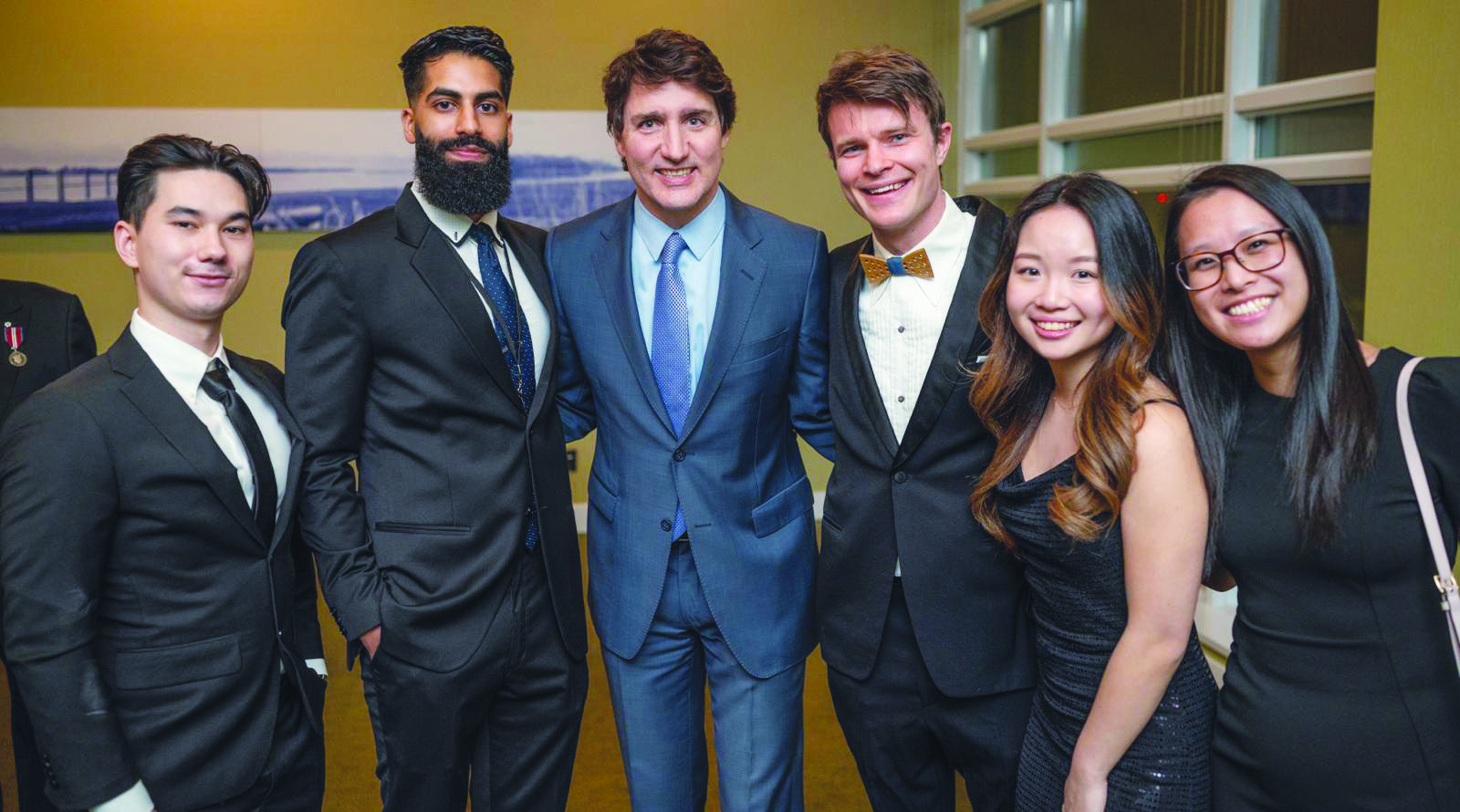 |
| In February 2024, UBC medical students and resident physicians had an opportunity to submit questions and policy priorities at the Vancouver Medical Association Osler Dinner. From left to right: Dr Lee Treanor (radiology), Dr Joban Bal (family medicine), Prime Minister Justin Trudeau, Dr Philip Edgcumbe (radiology), Ms Elsie Wang (medical student), and Dr Salina Kang (family medicine). |
hidden
 [13] [13] |
| This work is licensed under a Creative Commons Attribution-NonCommercial-NoDerivatives 4.0 International License [13]. |
Links
[1] https://bcmj.org/cover/october-2025
[2] https://bcmj.org/author/elsie-wang-bsc
[3] https://bcmj.org/author/joban-bal-md
[4] https://bcmj.org/author/philip-edgcumbe-md-phd
[5] https://bcmj.org/node/10924
[6] https://bcmj.org/sites/default/files/BCMJ_Vol67_No8_letters.pdf
[7] https://bcmj.org/print/letters/bc-medical-trainees-perspectives-canadian-health-system-improvement
[8] https://bcmj.org/printmail/letters/bc-medical-trainees-perspectives-canadian-health-system-improvement
[9] http://www.facebook.com/share.php?u=https://bcmj.org/print/letters/bc-medical-trainees-perspectives-canadian-health-system-improvement
[10] https://twitter.com/intent/tweet?text=BC medical trainees’ perspectives on Canadian health system improvement&url=https://bcmj.org/print/letters/bc-medical-trainees-perspectives-canadian-health-system-improvement&via=BCMedicalJrnl&tw_p=tweetbutton
[11] https://www.linkedin.com/sharing/share-offsite/?url=https://bcmj.org/print/letters/bc-medical-trainees-perspectives-canadian-health-system-improvement
[12] https://bcmj.org/javascript%3A%3B
[13] http://creativecommons.org/licenses/by-nc-nd/4.0/
[14] https://bcmj.org/modal_forms/nojs/webform/176
[15] https://bcmj.org/%3Finline%3Dtrue%23citationpop