The social contract: Defining how we show up for society
Issue: BCMJ,
vol. 68, No. 8, October 2026
|
Page 273 |
President's Comment
| doi.org/10.66794/2c79
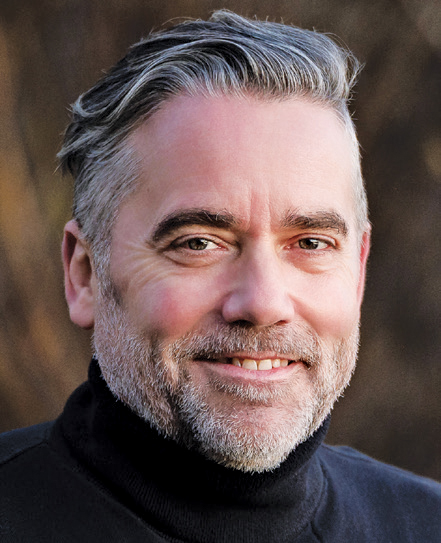 |
| Dr Adam Thompson |
As I write this in mid-August, I have just had the opportunity to spend time with the 48 new medical students who are beginning their journey at Simon Fraser University’s Stephens Family School of Medicine.
Nearly 2000 people applied for those 48 places. What particularly interested me was which attributes helped distinguish the successful applicants. There is, of course, a minimum bar for academic achievement. But what struck me was how much emphasis was placed on connection to community—not simply volunteering, but also being part of a sports team, playing in an orchestra, coaching, or contributing in ways that demonstrate real commitment to the community around them.
That’s a shift from my experience entering medical school, when community involvement mattered mostly as another form of achievement—captaining a team, leading a society, holding a position of distinction. I was delighted to see how much this has evolved.
The Stephens Family School of Medicine is clearly seeking to develop physicians who understand that their responsibility extends beyond the individual patient in front of them—physicians who see themselves as part of, and contributing to the health of, the communities in which they practise. That feels increasingly important.
Following this visit with the students, I read an excellent article co-authored by one of my predecessors, Dr Kathleen Ross, alongside Drs Courtney Howard, Katharine Smart, and Constance LeBlanc.[1] They make a compelling case that Canada’s greatest asset is its people and that investing in the wellness of current and future generations is fundamental to building a successful Canada. It is well worth reading.
The synergy between their argument and the approach being taken at SFU is striking. Both recognize that the health of individuals and the health of communities are inseparable. It also brings us back to something we perhaps don’t talk about enough: the social contract between medicine and society.
Doctors are among the most trusted professionals in Canada. In return, society expects something of us: competence, high ethical standards, putting patients first, and a responsibility for the health and well-being of the broader society in which we practise.
Doctors of BC’s strategic plan includes a focus on the future of the profession and the culture of medicine. I believe this gives us an opportunity—and perhaps a responsibility—to define what that social contract looks like for the physicians of today and tomorrow.
SFU has a clear vision for the physicians it aims to graduate, but many of us graduated years, even decades, ago. We are increasingly disconnected from the environment in which we trained, even though we still have many years of our careers ahead of us. That makes me wonder: If we don’t define how we want our profession to show up for society, who will?
I worry that we are already seeing the consequences of allowing others to define this for us. Changes stemming from the Health Professions and Occupations Act, which diminish our self-regulation, and issues such as the assignment of most responsible physician status to physicians on call all raise questions about who ultimately defines the responsibilities, autonomy, and culture of our profession.
These are not simple issues, and I don’t pretend there are easy answers. Over the coming months, the Board of Directors, with support from the Representative Assembly, will begin these conversations and explore what the future of our profession and its culture should look like. The conversations will not always be comfortable—there will be disagreement, including on professional autonomy and the different ways physicians choose to practise. But they are conversations we need to have, because ultimately, we should retain ownership of how our profession shows up for society.
And perhaps, if we get the culture right—by combining clinical excellence with genuine connection to the community and a renewed understanding of our social contract—physicians can play an even greater role in helping Canada leverage one of its greatest assets: its people.
That feels like a future worth working toward.
—Adam Thompson, MD
Doctors of BC President

This work is licensed under a Creative Commons Attribution-NonCommercial-NoDerivatives 4.0 International License.
References
1. Ross K, Smart K, Howard C, LeBlanc C. Canada’s greatest asset isn’t beneath our feet. It’s our people. Insights. Longwoods Publishing Corporation, August 2026. Accessed 13 August 2026. www.longwoods.com/content/27919/insights/canada-s-greatest-asset-isn-t-beneath-our-feet.-it-s-our-people.

The upcoming provincial election gives a rare opportunity for physicians to register their displeasure at this government. And register they should. This NDP government has declared war on healthcare providers, and on physicians in particular. It's weapon of choice is Bill 36, now enacted as HPOA.
As you intimate in your President's Comment, with this legislation, doctors (and other providers) are subject to:
1. Direct government control:
o Regulatory colleges that are composed of government appointees only
o Complaints and disciplinary decisions that are made by government appointees only
2. No recourse to appeal
o Any appeals, including to the Supreme Court of Canada, are expressly legislated against
3. A complaints process that undermines their rights and expectations of privacy
o Minor disciplinary actions must be disclosed, and all complaints (including those that are dismissed, or unpursued) can and will be disclosed on request, and publicised
4. Additional costs and fees, potential criminal penalties and massive fines
This is a draconian piece of legislation, that strips away many of our rights inherited under English common law: It threatens our right to earn a living unimpeded by arbitrary restrictions. It is an unwarranted impairment of our right to personal and professional privacy, and it flies in the face of natural justice: viz. getting a fair hearing, having a trial by one's peers, and the right to appeal.
One may think that the Opposition (such as it is) is or could be worse. That is indeed a risk. However, this government has revealed its true colours. They should not be rewarded with a new, or increased mandate.
Encouraging your colleagues to vote accordingly, holding their noses, if necessary, would be a service to our profession.
Yours truly,
Dr. Alister F. Frayne MB.ChB, MBA, FCFP