Dr John Law, 1958–2026
Issue: BCMJ,
vol. 68, No. 8, October 2026
|
Pages 294-295 |
Obituaries
| doi.org/10.66794/2c72
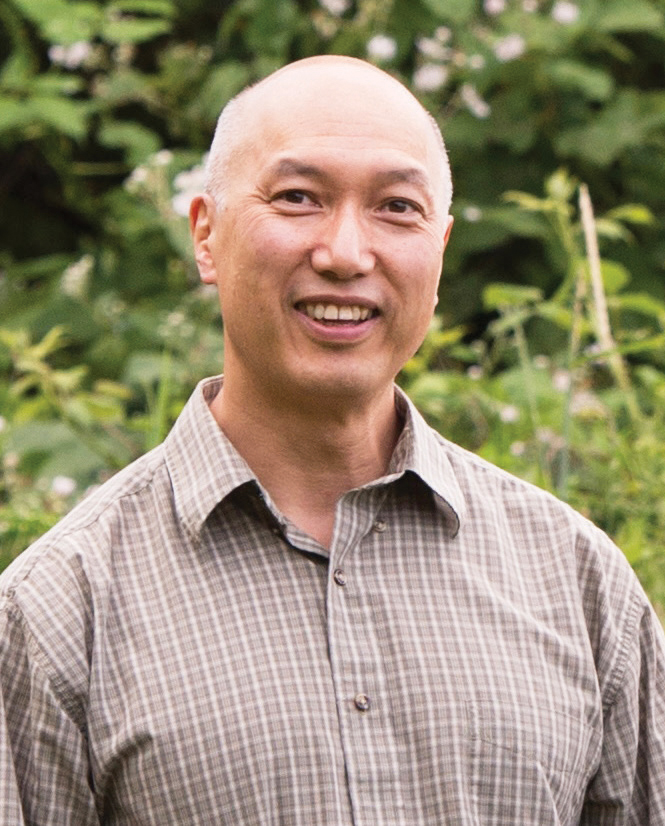
Dr John Law, my friend, passed away peacefully in Nanaimo on 11 March 2026 at the age of 68, surrounded by his loving family.
I write this remembrance of John from a place of grief but also with immense gratitude for the blessing of his presence in my life and the lives of many others. He embraced life fully, with curiosity and enthusiasm, and he met every person with kindness and compassion. Our lives have been enriched and transformed by John’s words and actions. He inspires us still as a model of what a physician can be and what to make of a life. John was my best friend from medical school and the physician I most admire.
John was born in Vancouver on 1 February 1958. He grew up in the Strathcona neighborhood of Chinatown in a house with no indoor plumbing except for the kitchen sink, which sat atop a dirt-bottomed cabinet. He could hear the coos of the pigeons living in the vacant suite upstairs. John’s first career was plumbing. John once said, “The past serves me well, and I am so grateful for all that I have survived. I like to think of investing and profiting from my suffering when I encounter challenges. This is how we can learn and improve.”
At the University of British Columbia, he met his wife and best friend, Bonnie. After graduating from medical school, John served in the Canadian military as a medical officer and began his family practice in the Courtenay Medical Clinic.
Like all great physicians, John continued to refine his skills and expand his knowledge beyond medical school, motivated by his deep desire to help his patients. I know of no other physician with the breadth and depth of John’s clinical and counseling skills.
John studied and practised mindfulness, acupuncture, clinical hypnosis, trigger-point therapy, neuroprolotherapy, and a variety of myofascial skills, including the Franklin Method and osteopathic techniques. He shared his learning generously with colleagues and trained international medical graduates.
John did more for his patients than any other physician I know. In addition to his full clinic practice, he taught weekly 90-minute group sessions in psychological skill building, teaching his patients practical skills such as mindfulness, couples’ therapy, motivational interviewing, trauma therapy, dialectical-behavioral therapy, addictions therapy, and cognitive-behavioral therapy (CBT). He would accept some of the most challenging patients, because he knew no other physician would care for them.
John told me, “I have realized I am so drawn to medical hypnosis, motivational interviewing, positive psychology, mindfulness, and CBT because of the empowering nature of the communication and the intent. Put together with our technological advances, wonderful outcomes can result.”
John enjoyed a rich life outside of medicine. With his lifelong curious and humble spirit, he challenged himself by studying public speaking with Toastmasters; swimming; playing guitar, ukelele, violin, piano, saxophone, and banjo; singing; and dancing, including doing the West Coast Swing with Bonnie.
John cherished his beautiful family. He was a devoted, loving, and wise husband and father, and he inspired both of his children, Christine and Meesh, to become physicians.
John inspired his family, friends, colleagues, and patients to rise to life’s challenges. He saw and brought out the best in us. He was always cheering us on.
John did not get lost in the title, role, and work of a physician. This was his advice to me on life after an accomplished career in medicine: “Going into retirement to explore and learn skills that might enhance my quality of life meant at times being the one with the least skill in a group. It is liberating to judge myself not by my skills or accomplishments but [by] how I treat others and myself.”
After John’s retirement, he and Bonnie moved to Nanaimo, where their daughter, Christine, had established her family practice. He continued to enjoy his passions in music, exercise, gardening, and, above all else, his family.
He is survived by his loving wife, Bonnie; his children, Christine Layton (Elliot) and Meesh QX; his grandchildren, Quinn and Afton Layton; and many family members and friends. Our lives have been enriched and transformed by John. He inspires us still.
—Davidicus Wong, MD
Vancouver

This work is licensed under a Creative Commons Attribution-NonCommercial-NoDerivatives 4.0 International License.